Get Full Government Meeting Transcripts, Videos, & Alerts Forever!
Get email alerts on the Elections Legal Landscape topic
No spam. Unsubscribe anytime.
Committee hears national and federal election law developments including NVRA cases, SAVE Act and presidential executive order
Summary
Staff with the Office of Legislative Research and General Counsel briefed the Government Operations Interim Committee on recent national and federal developments in election law, including federal court rulings, pending federal legislation and an executive order concerning documentary proof of citizenship.
Staff with the Office of Legislative Research and General Counsel briefed the Government Operations Interim Committee on recent national and federal developments in election law and policy, including a U.S. Supreme Court precedent on the National Voter Registration Act (NVRA), a 2025 Ninth Circuit decision challenging Arizona restrictions, the House‑passed Safeguard American Voter Eligibility (SAVE) Act, and a March 25, 2025, presidential executive order.
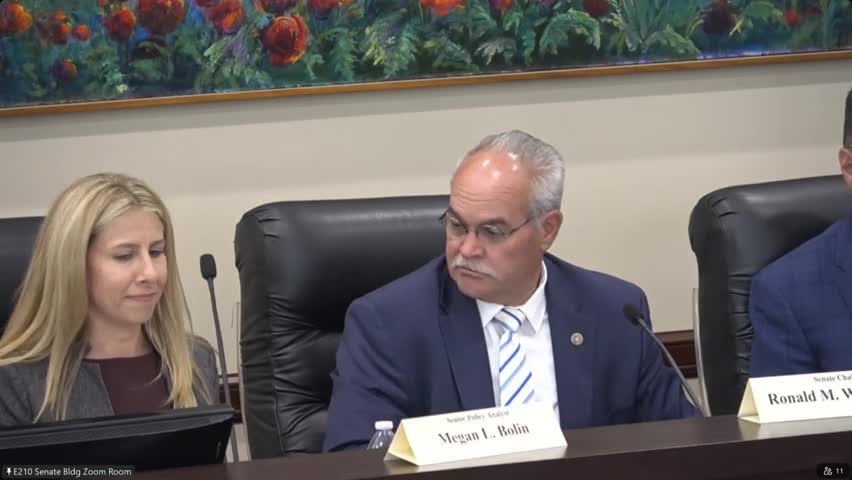
Megan Bolin summarized national legislative activity and said voter registration, absentee and mail voting, election‑security statutes and voter identification have been among the most active topics in state legislatures this year. She noted 3,080 election‑related bills had been introduced nationally and that 210 had been enacted in 33 states, per NCSL data presented to the committee.
Michael Cipriano of the legislative counsel’s office reviewed relevant case law and the NVRA background. Cipriano explained the NVRA requires states to accept and use the uniform federal voter registration form, which asks applicants to attest under penalty of perjury that they are U.S. citizens without requiring documentary proof. He summarized the legal history involving Arizona and noted a recent Ninth Circuit decision in Mia Familia Vota v. Fontes (Feb. 2025) that preliminarily held Arizona could not require federal‑form applicants to provide documentary proof of citizenship to vote by mail; litigation is ongoing.
Thomas Vaughn reviewed federal actions. He said the SAVE Act, which passed the U.S. House on April 10, 2025 by a 220‑208 vote, would require documentary proof of U.S. citizenship for any application to register to vote in a federal election; it also would require states to implement verification programs and would add enforcement provisions. Vaughn also summarized a March 25, 2025, presidential executive order directing the Election Assistance Commission to require documentary proof of citizenship on the federal form and to support state verification efforts; the order has prompted litigation and implementation questions because of separation‑of‑powers and statutory‑authority issues.
Committee members asked whether Utah’s legislation already aligns with those federal initiatives. Staff noted Utah enacted HB 300 this session, which requires mail ballots to be received by election day and includes other changes; some committee members signaled support for preserving state prerogatives while considering federal direction. Staff flagged a separate Utah Court of Appeals decision on public record access to ballot images and cast‑vote records, holding that Title 28 governs the records and that those election returns are sealed and destroyed after 22 months under state election law.
Presenters emphasized the evolving national landscape and that the committee’s interim work items on voter identification, voter registration and signature verification would allow the committee to consider litigation risks, statutory alignment and practical implementation issues before the next legislative session.
No formal committee action was taken on federal proposals; the presentations were informational and fed into the committee’s adopted interim study list.