Get Full Government Meeting Transcripts, Videos, & Alerts Forever!
Get email alerts on the Opler Healthcare Review topic
No spam. Unsubscribe anytime.
OPLER presents early findings on healthcare licensure review; committee opens bill file for follow-up
Summary
The Office of Professional Licensure Review presented early findings from its review of nursing and allied-health licensing. OPLER told committee members the healthcare workforce is broadly adequate, some allied-health professions show low potential for harm and may warrant alternative regulation, and education escalation is affecting access.
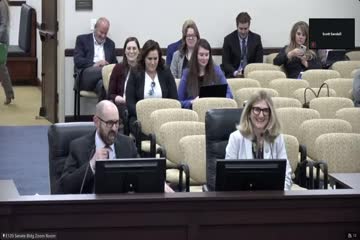
The Office of Professional Licensure Review briefed the House Business and Labor Interim Committee on early findings from a multi-year review of health care occupational licenses. Jeff Shumway, OPLER director, and Jennifer Adler, OPLER policy lead, presented data and said the review is in its early stages; the committee voted to open a bill file to address recommendations as they develop.
Main findings: OPLER reported three headline takeaways: some allied-health occupations have a low potential for harm and may be candidates for less burdensome regulatory models; the workforce generally appears adequate for current statewide needs though geographic and specialty gaps exist; and the pace of professional change (education requirements, new technologies and practice models) outstrips current static statutory regulation.
Representative statements and committee concerns: Representative Melissa Ballard raised reimbursement and telemedicine parity issues, saying insurers sometimes reimburse telemedicine at reduced rates that affect access and clinician willingness to provide remote care. OPLER staff said they will consider those external factors, such as payer policy and facility credentialing, alongside licensure as contributors to access problems.
Data and examples: OPLER staff presented complaint rates, employment concentration indices, and education-trend charts showing the shift in several allied-health professions toward doctorate-level entry (for example, physical therapy). Director Shumway cautioned, “These are very early findings,” and Adler summarized a key frame: “If you're a patient and you approach the healthcare system, you want 3 things fundamentally. You want quality care, you want access to that care and you want that care to be affordable.”
Committee action: Committee members voted to open a bill file to give staff and counsel flexibility to consider OPLER's forthcoming recommendations and draft any needed statutory language. OPLER said it will continue public engagement and analysis and may bring specific bills in the next legislative cycle based on the two-year review of multiple occupational groups.
Why this matters: Licensing affects consumer safety, provider supply and costs. OPLER emphasized that licensing is one lever among many — including payer policy, accreditation, and facility credentialing — and recommended the committee consider integrated approaches to expand access while maintaining safety.
Next steps: OPLER will continue stakeholder outreach and produce formal reports; the committee's open bill file will allow rapid drafting if OPLER's final recommendations require statutory change.