Get Full Government Meeting Transcripts, Videos, & Alerts Forever!
Get email alerts on the Transportation Border Corridors topic
No spam. Unsubscribe anytime.
Senate committee weighs tighter controls, fees for overweight corridors near Pharr International Bridge
Summary
The Senate Transportation Committee considered bills to clarify overweight-corridor authorizations, restrict hazardous-material permits, raise permit fees and require RMAs to shoulder construction and maintenance costs for new connector roads serving the Pharr International Bridge; measures were left pending pending related legislation.
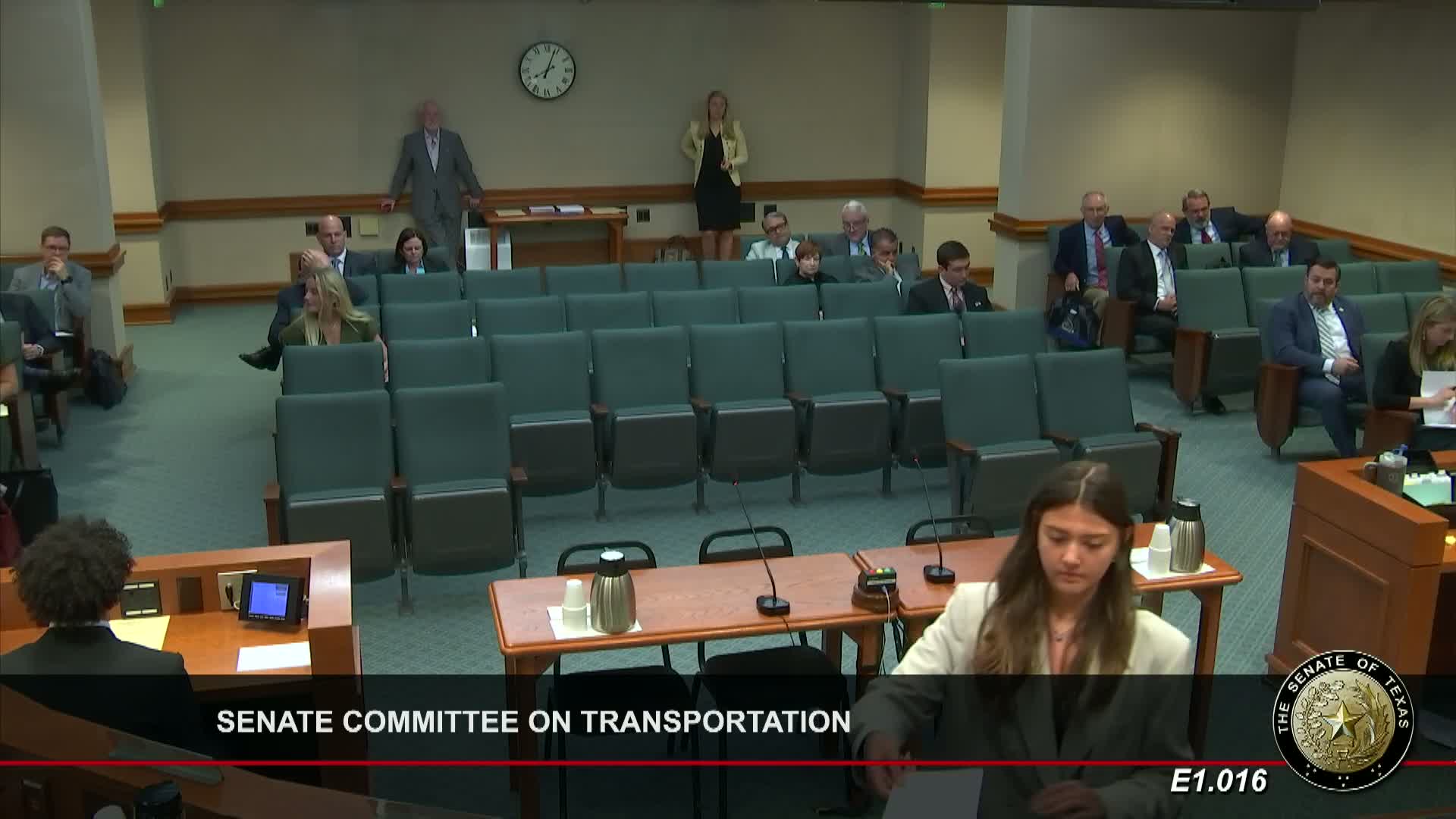
The Senate Committee on Transportation on Thursday considered two related bills that would change how oversized and overweight vehicle permits are authorized and paid for around the Pharr International Bridge and other Hidalgo County corridors.
Senator José Hinojosa, the bill sponsor, told the committee, “Oversized and overweight freight traffic plays a key role in cross border trade in Hidalgo County.” He said the measure would add West Daffin Road and State Highway 365 to the list of roads eligible for special permits and would correct the name of State Highway 365 to the 365 Tollway.
The committee substitute presented during the hearing removed language that would have allowed a small city to issue overweight permits on designated roads, barred the Hidalgo County Regional Mobility Authority from issuing permits for vehicles transporting hazardous materials in cargo tanks regulated at the federal level, and allowed the RMA to raise the maximum per-trip permit fee from $200 to $250 effective Sept. 1, 2025. The substitute also requires the RMA to cover all costs to construct and maintain West Daffin Road and any other off-system roads it designates after Sept. 1, 2025, using permit fees collected by the RMA, and it requires the RMA to return to the Legislature for future corridor designations. Finally, the substitute makes passage contingent on the passage of Senate Bill 2949, related to fuel-depot roads.
Luis Bassan, director of the Pharr International Bridge, told the committee the bridge is a major trade corridor: “The bridge is currently operating at maximum capacity at 6,000 commercial trucks moving northbound and southbound every single day,” and the planned expansion would increase commercial crossings by over 40 percent. Bassan said TxDOT recognized a previous drafting error in an August 2024 minute order and that the bills would put that administrative action into statute.
Committee members asked for details about hazardous-material restrictions, the reason for legislative approval of corridor designations, and how the changes interact with federal limits on interstate highways. Senator Hinojosa said the substitute was intended to unify oversight, address confusion caused by multiple names for the same road segment, and preserve safety and oversight for corridors carrying hazardous cargos.
No final vote was taken on either bill; both were left pending in committee. Public testimony was heard and closed before the committee paused consideration pending the related Senate bill.
The bills would alter permit authority, adjust fees, and require locally controlled funding of connector construction and maintenance for certain off-system roads. Committee records show the proposals remain contingent on broader border-transportation legislation.