Get AI Briefings, Transcripts & Alerts on Local & National Government Meetings — Forever.
Senate panel backs optional 8% employee contribution option for TMRS
Loading...
Summary
The Senate Finance Committee voted to report House Bill 3161 out of committee after testimony backing a permissive option to let Texas cities add an 8% employee contribution rate to the Texas Municipal Retirement System (TMRS). Supporters said the change is optional and intended to help local recruitment and retirement funding choices.
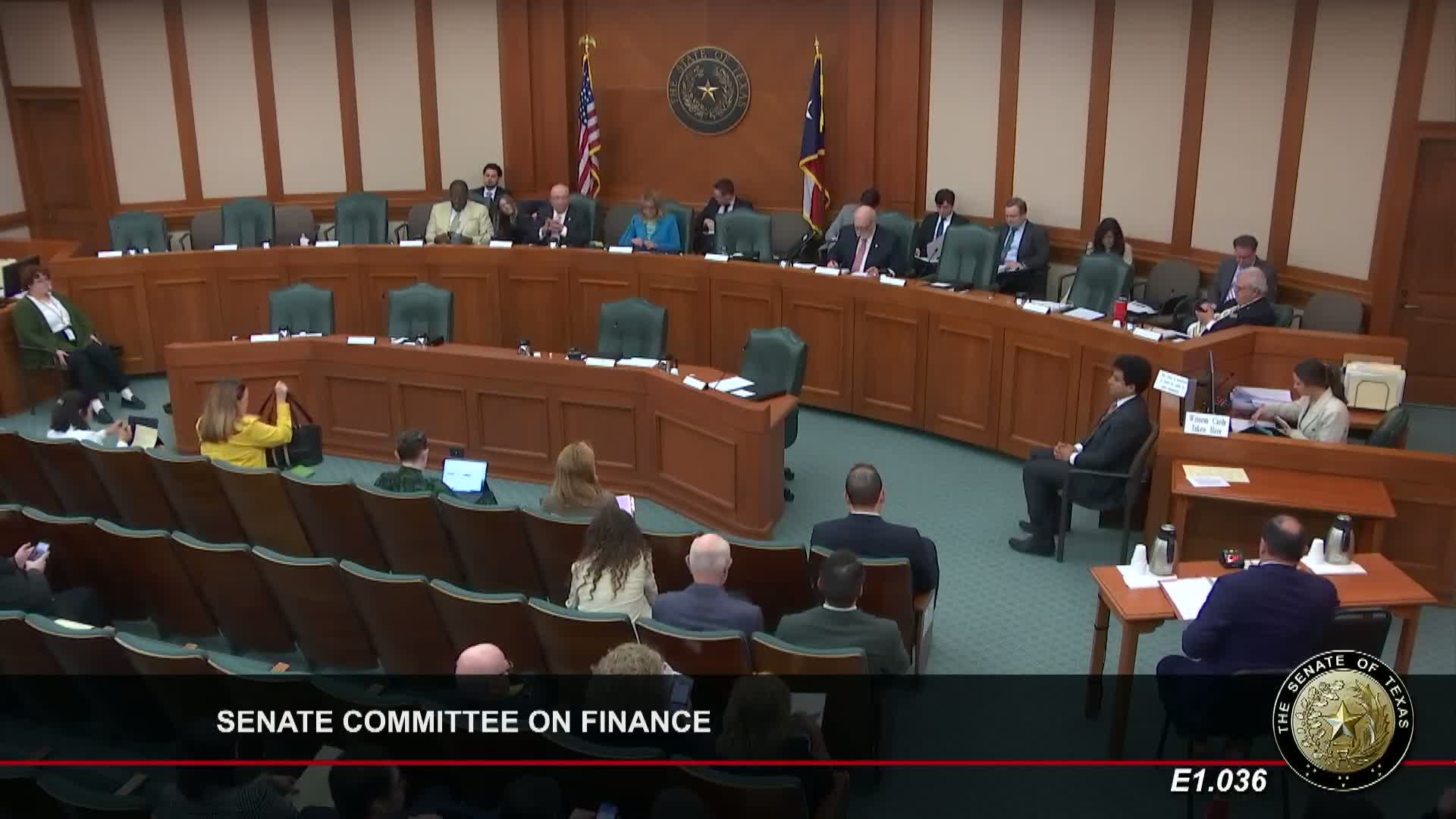
House Bill 3161, carried in the Senate by Senator Adam Hinojosa, was laid out to the Senate Finance Committee as a permissive change allowing municipalities participating in the Texas Municipal Retirement System to adopt an 8% employee contribution rate. Senator Hinojosa said the bill adds an option beyond the current 5%, 6% or 7% contribution choices and stressed the change would be voluntary for cities.
The bill’s sponsor said the added option is intended to allow cities to align retirement contributions with local fiscal needs and workforce recruitment pressures. "This added flexibility allows local governments to better align retirement contributions with the financial needs and goals of their workforce," Senator Hinojosa said during his presentation to the committee.
Two law-enforcement witnesses testified in support. Scott Leighton, a Corpus Christi police officer and president of the Combined Law Enforcement Associations of Texas, told the committee he supported the bill and supplied letters from police organizations and the Corpus Christi city manager’s office. "It is not mandatory. It is completely optional," Leighton said.
Henry Mangum, who described himself as a 31½-year Corpus Christi Police Department veteran and president of a local association, said the 8% option would give municipalities another tool to remain competitive in hiring. "If the city chooses to do it, it gives them another chance to be competitive in a highly competitive job market," Mangum said.
The committee moved the bill to the full Senate with a favorable recommendation. The committee vote on the motion to report HB 3161 was recorded as 9 ayes, 0 nays. The committee record shows the change is permissive; no mandatory statewide increase was proposed.
The bill text and testimony preserved a prior exemption for municipalities that adopted differing contribution rates for separate departments before Sept. 1, 1990, allowing those local ordinances to remain in effect until a municipality elects to standardize its rates. The committee took no additional action beyond reporting the bill to the full Senate.