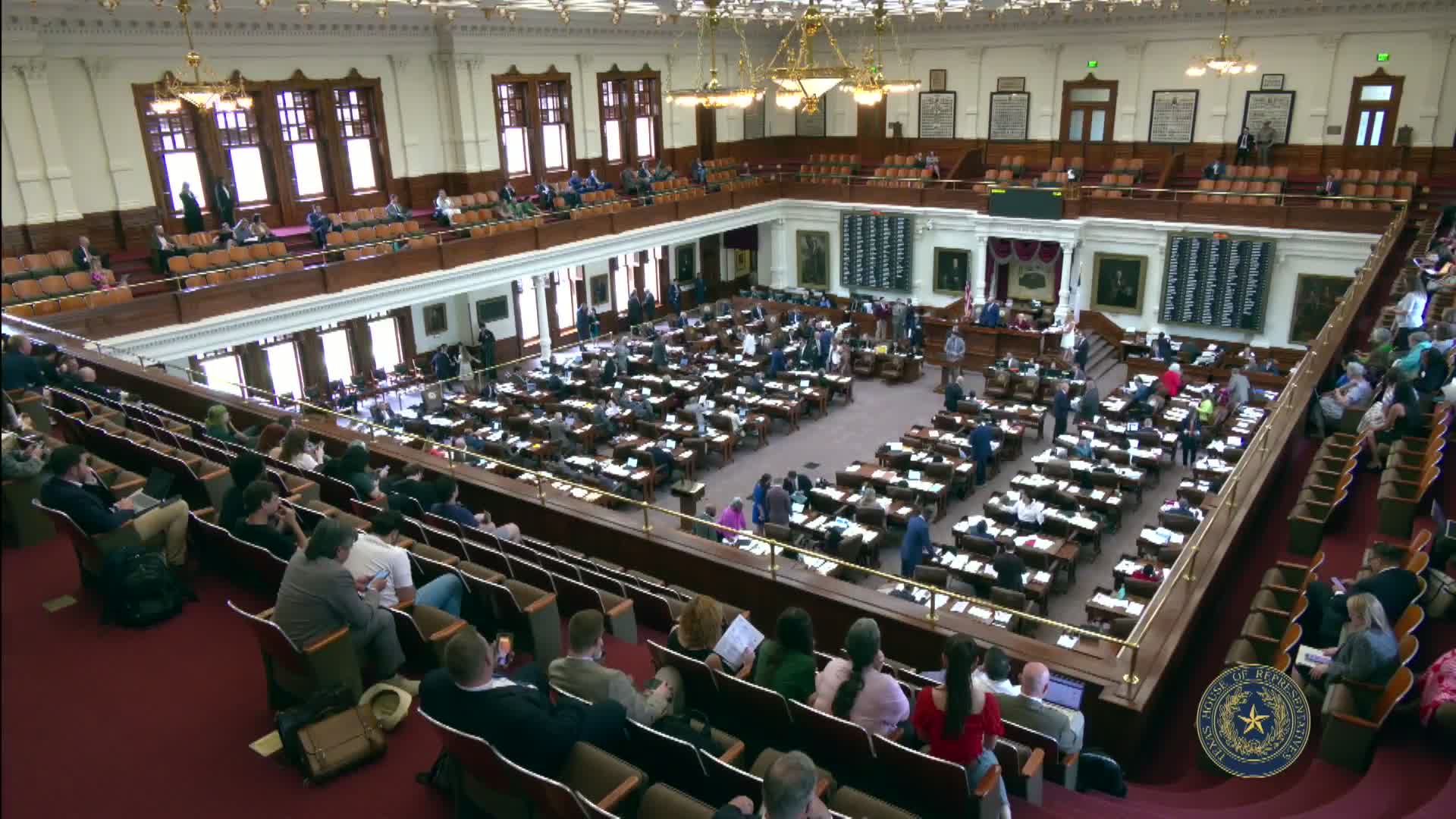
Texas House approves increase to homestead exemption amid debate over local impacts
Loading...
Summary
The Texas House voted to pass Senate Bill 4 on third reading, approving an increase in the school-district homestead exemption from $100,000 to $140,000 and related measures intended to deliver state-funded property tax relief to homeowners.
Supporters said the bill will deliver direct relief to millions of homeowners while protecting school districts; opponents said the measure risks shifting tax burdens to local governments and does not address appraisal-driven tax increases.
Representative Meyer, chair of the House Ways and Means Committee, told colleagues, "This bill does in fact help millions of Texans with their property tax burden." He led the bill and offered hold-harmless changes intended to protect school districts, including moving the hold‑harmless effective date to Sept. 1, 2025, and broadening the compression protections marked in the draft language.
Representative Olcott offered an amendment to further increase the exemption; he said the state had a large surplus and argued more of that funding should go to homeowners. Representative Meyer and others said the session’s negotiated package already sets the funding available and that the amendment lacked a funding source. The chamber voted to table Olcott’s proposal; the motion to table prevailed on a record vote, 96-35.
Representative Harrison, who opposed the package’s scope, warned the bill would not cure the overall property-tax problem and criticized state leaders for not doing more to restrain local governments. He said, "Never-ending property taxes are unethical. They're immoral." Representative Harrison nonetheless said he would vote for the bill as the most substantial relief likely to pass this session.
The bill’s supporters emphasized the larger package of property-tax measures negotiated between the House, Senate and executive branch. Representative Meyer told members the session’s property‑tax package totals roughly $10 billion including increased business personal property exemptions, homestead changes, and compression relief, and that school district hold‑harmless language had been added to prevent local revenue shortfalls.
On final passage the clerk reported the result as 45 ayes, 0 nays; the house then moved the related constitutional and statutory measures through committee scheduling (SJR 2 and related bills) to enable the exemption change if approved by voters where required.
What the bill does, and what it does not: SB 4 raises the exemption applied to the taxable value of a homeowner’s residence for school-district tax calculations; it does not change appraisal methods or directly change local tax rates. Lawmakers and members of the public repeatedly noted that appraisal increases and decisions by local taxing units can offset some or all of the relief for individual homeowners, and several representatives urged continued work on measures aimed at limiting rate increases and improving accountability at the local level.
The house adopted an amendment offered by Meyer to change effective dates and broaden hold‑harmless protections for school districts. A subsequent amendment by Representative Olcott to further raise the exemption failed to advance after a successful motion to table; a record vote was taken on the tabling motion. The house then approved SB 4 on third reading.
Next steps: The bill’s passage in the House sends the measure and related fiscal/constitutional items toward the final legislative steps and, where applicable, to voter consideration for constitutional changes. Lawmakers said they expect additional implementing legislation and budget language to appear in concurrent bills to make the funding adjustments required to hold school districts harmless.
Speakers quoted in this article spoke on the House floor during the SB 4 debate and are listed in the article’s speaker section.