Get Full Government Meeting Transcripts, Videos, & Alerts Forever!
Get email alerts on the Child Welfare topic
No spam. Unsubscribe anytime.
Senate Human Services panel adopts amendment to clarify when child-fatality reviews are triggered
Summary
The Senate Committee on Human Services voted 4-1 on May 20 to adopt an A3 amendment to House Bill 3,795 A clarifying that a report to the Department of Human Services that a person “suspects” child abuse or neglect should count as the kind of report that triggers a critical incident review team when a child later dies under suspicious circumstances.
SALEM, Ore. — The Senate Committee on Human Services voted 4-1 on May 20 to adopt an A3 amendment to House Bill 3,795 A clarifying that a report to the Department of Human Services that a person "suspects" child abuse or neglect should count as the kind of report that triggers a critical incident review team (CERT) when a child later dies under suspicious circumstances.
The amendment, introduced in committee as A3 and described by its sponsor as a clarification, follows questions about whether DHS's internal rulemaking narrowed the statute's original intent. Supporters said the change aligns the statute with the legislative record; the department said it would review closed-screening reports under the clarified language but warned the change could increase the number of CERTs.
The clarification matters because CERTs review systems and processes after a child fatality to identify systemic improvements. Legislative Counsel Laurie Ann Sills told the committee her opinion was that "closed screening ... most likely means, if somebody makes a report to DHS that they believe is child abuse, a report of child abuse, then that would be what would be ... covered in this provision" and that the statutory purpose was to examine cases where a report was made but no investigation was opened.
Molly Miller, deputy director for child welfare at the Oregon Department of Human Services, described the department's operational view: "A closed out screening per the definition of our rule is that it is not a report of abuse or neglect. It's a report related to the conditions of the family and the child that pose a risk to the child." She said DHS has been reviewing closed screenings as potential "anchor reports" and would "review those and make a decision about whether or not that report was a report of abuse. If it was, we will initiate the CERT."
Committee members pressed both sides on how the department's rule language diverged from the 2017 statutory change that added closed-screening reports as a CERT trigger. Chair Gelser Blueen said she brought the amendment because the agency's interpretation appeared inconsistent with the legislative record: "It is frustrating to have us as a legislative branch go through a process to establish law and then have the law undone by the agency." Legislative Counsel said the statute and legislative history indicate the reporter's suspicion — not an internal agency determination that the report met the statutory definition of abuse — should trigger review.
Committee members also asked about practical effects. DHS told the committee that while it believes it is operating in compliance, clarifying the language to reference "suspected" abuse would likely increase the number of CERTs. The department estimated there were roughly "in the high teens" to low 20s CERTs a year and acknowledged the change could produce more reviews and more public reporting about child fatalities; the Legislative Fiscal Office scored a minimal fiscal impact for the amendment.
During committee discussion, members also explored procedural issues the amendment does not alter. DHS staff said CERTs are not criminal-investigation vehicles and do not themselves impose sanctions; rather, they produce system-level recommendations (for example on safe-sleep practices or training). DHS said some CERTs review cases where later medical findings show death was not caused by abuse, but that the CERT process can still identify systemic safety gaps.
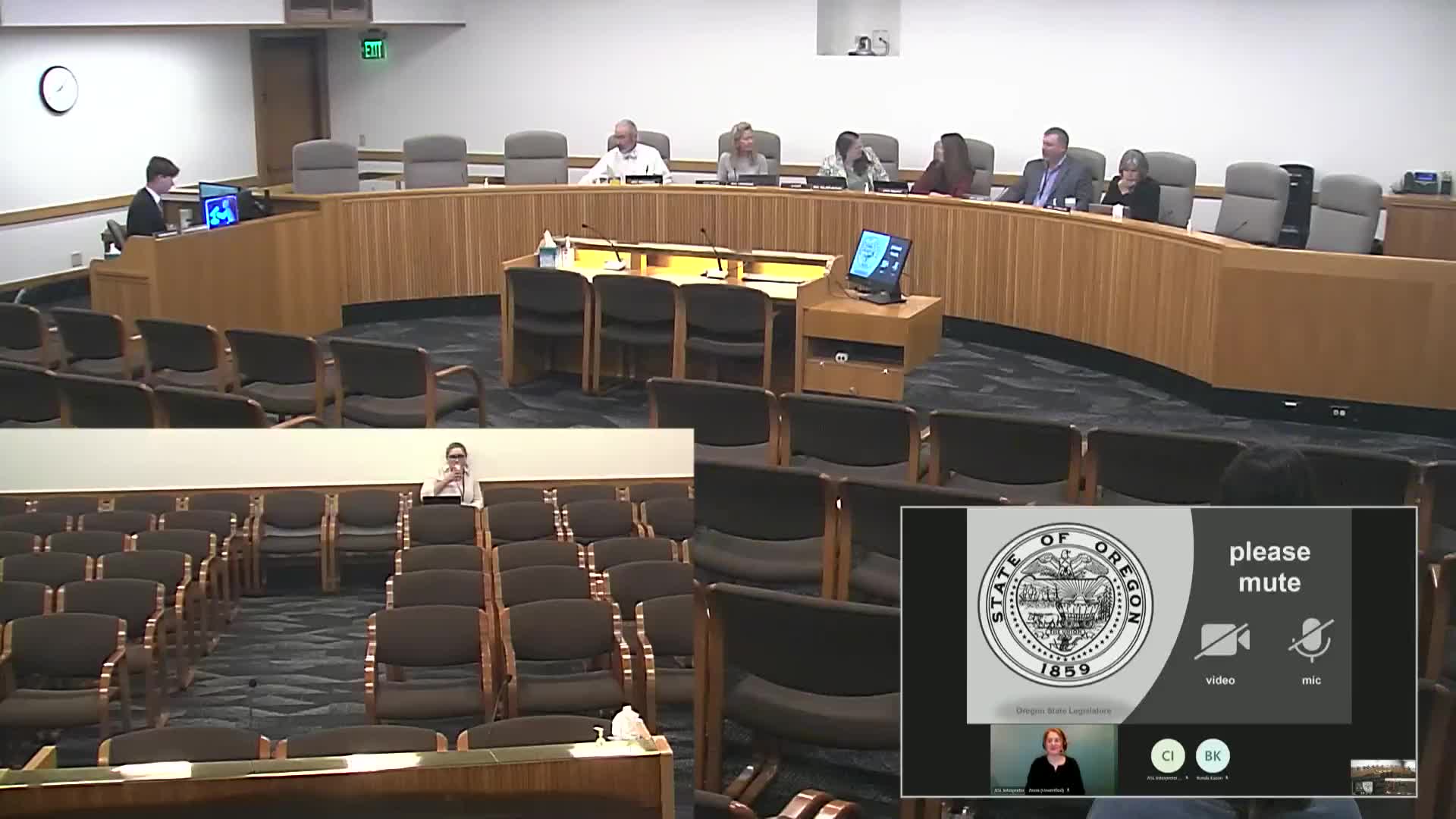
Senator Lythagam moved adoption of the A3 amendment. The roll call on the amendment was recorded as: Senator Nash—Aye; Senator Brzezinski—Aye; Senator Reynolds—Aye; Vice Chair Lefkowitz—No; Chair Gelser Blueen—Aye. With the required votes received, the committee adopted the A3 amendment.
The committee subsequently gave a due-pass recommendation to the floor for the bill as amended.
The committee hearing combined the Legislative Counsel opinion, agency testimony and questions from multiple senators; committee members asked whether the amendment's single-word clarification would be sufficient or whether more explicit statutory language would be necessary to prevent future narrowing in rule. Supporters said inserting "suspected" tracks the statute and the record; at least one member opposed the amendment on the grounds that the statute already conveys that meaning and the amendment was redundant.
The measure will now move to the Senate floor with the committee's recommendation. Committee members and agency staff said they expected the department to review its screening documentation and to apply the clarified standard when determining whether a prior closed screening should be considered the anchor report that triggers a CERT.