Get Full Government Meeting Transcripts, Videos, & Alerts Forever!
Get email alerts on the Septic Systems topic
No spam. Unsubscribe anytime.
House passes bill expanding financial assistance for failing on‑site septic systems
Summary
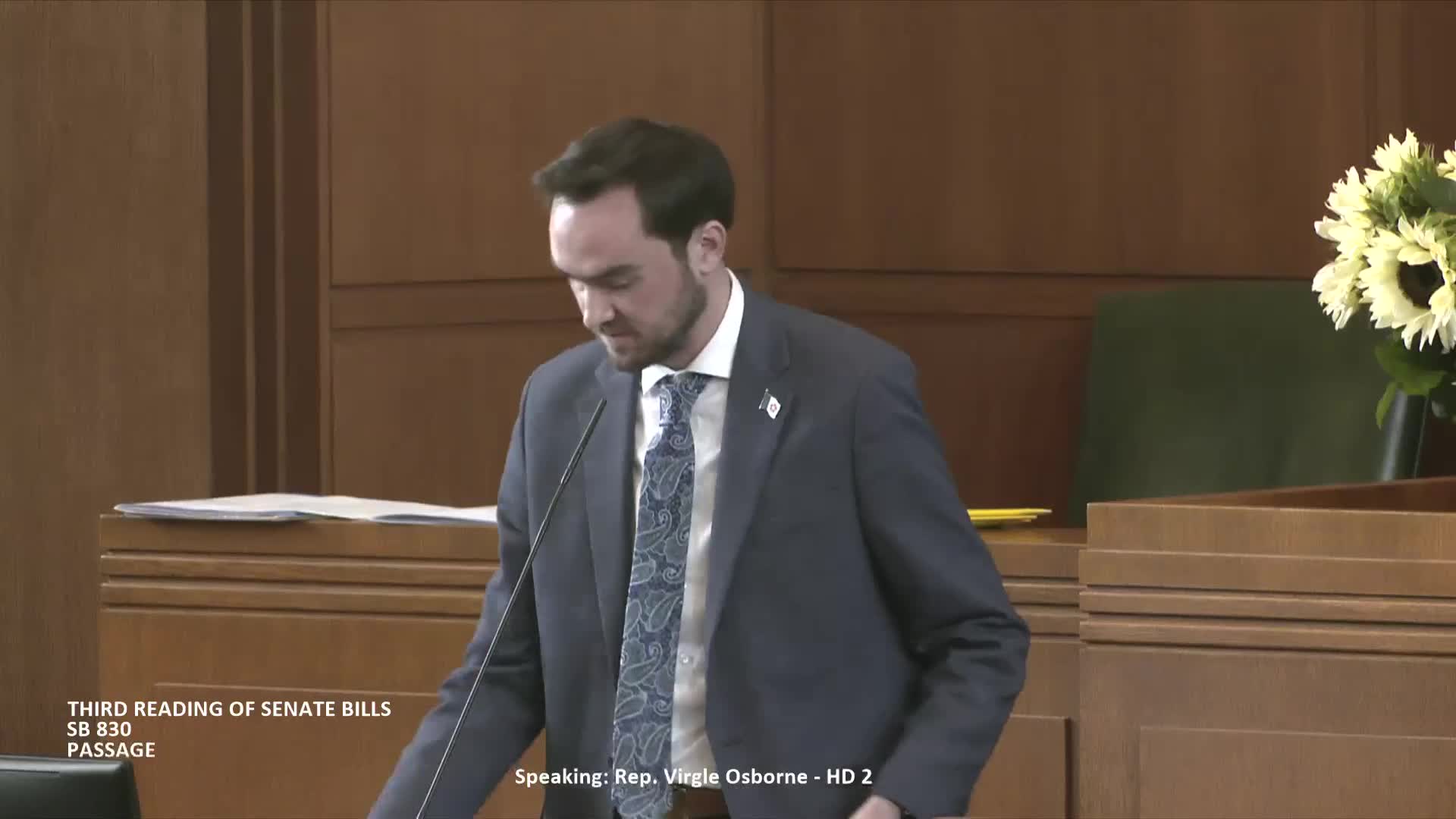
Senate Bill 8‑30 passed the House to expand the Oregon DEQ on‑site wastewater program to allow grants as well as low‑interest loans and to make residential housing providers eligible, excluding short‑term rentals, with special focus on wildfire‑impacted and rural areas.
The House approved Senate Bill 8‑30, which expands financial assistance tools for homeowners and certain residential housing providers dealing with failing on‑site septic systems. Representative Bobby Levy carried the bill and said it would add grants to the Department of Environmental Quality's existing low‑interest loan program and extend eligibility to residential housing providers, explicitly excluding short‑term rentals.
Why it matters: In rural areas and in places affected by wildfire, failing septic systems can create public‑health hazards and prevent rebuilding. Supporters said the bill gives DEQ flexibility to offer appropriate assistance — grants where loans are impractical — and helps households that lack access to public sewer.
Representative Bobby Levy told the House the bill “provides practical, much‑needed help to Oregonians who are dealing with aging failing and damaged on‑site septic systems, particularly in areas that have experienced wildfire or do not have access to public sewer infrastructure.” He said the program extension “has no revenue impact, only a minimal fiscal footprint,” and that the change is designed to better serve rural and underserved communities.
The measure passed on third reading after floor remarks. The sponsor emphasized the bill’s focus on public health and DEQ’s discretion to provide the right type of assistance for each household’s needs.