Get Full Government Meeting Transcripts, Videos, & Alerts Forever!
Get email alerts on the Water Infrastructure topic
No spam. Unsubscribe anytime.
House approves bill giving PUC a structured process to address failing private water utilities
Summary
The House passed Senate Bill 8‑45, directing the Public Utility Commission to establish a process for addressing incumbent private water utilities that fail to provide safe, adequate service, including sale, reorganizing, or appointment of an independent administrator when justified.
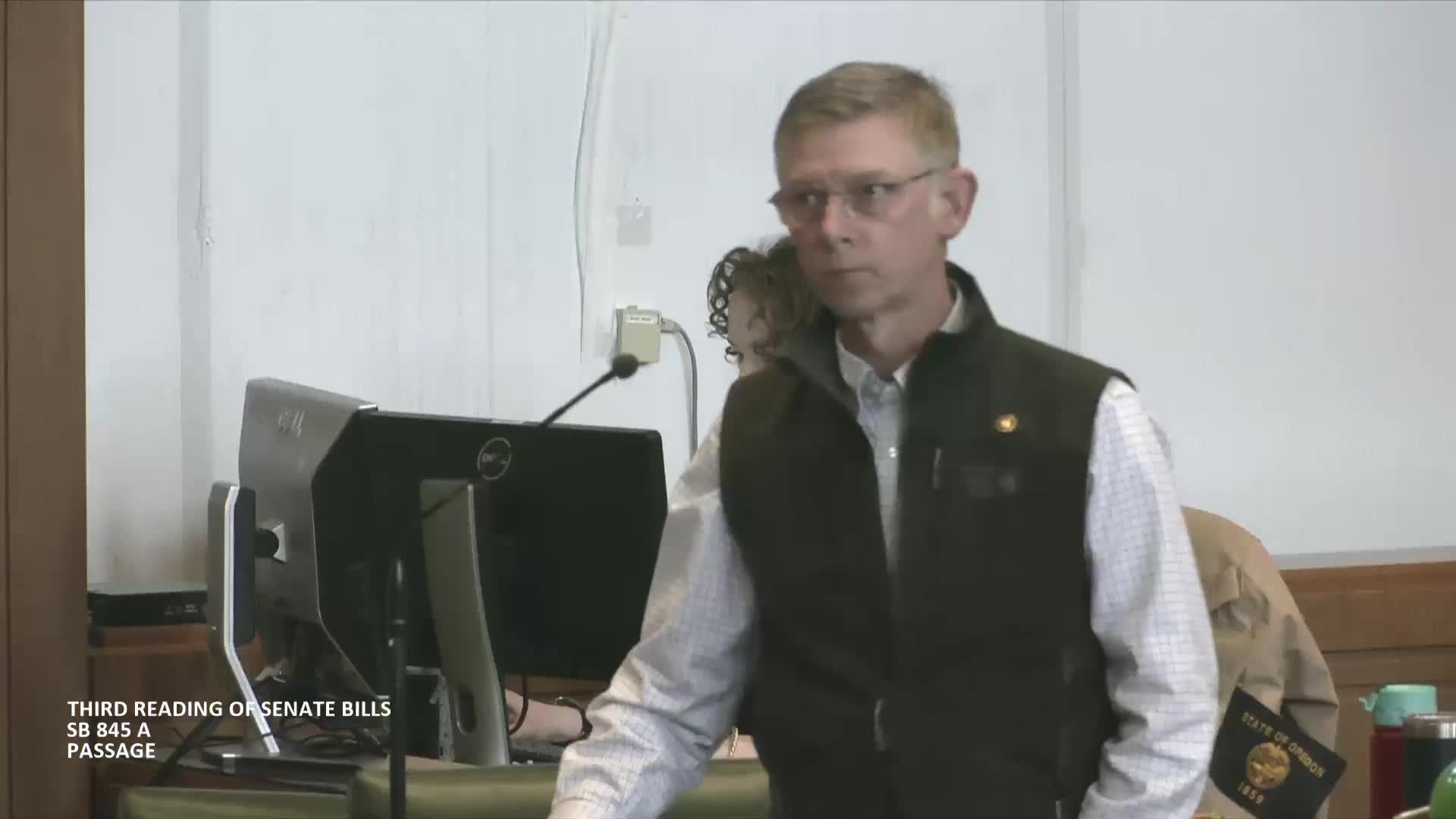
Lawmakers approved a bill Wednesday to authorize the Oregon Public Utility Commission to follow a defined process when private water utilities fail to provide safe, adequate drinking water. Representative Helm, carrying the Senate measure on the House floor, framed the measure as a narrowly tailored tool for rare but serious situations that left customers without reliable drinking water.
Why it matters: The measure creates a statutory process for the PUC to initiate contested proceedings, provide written notice to a utility, and, where high standards are met, pursue alternative actions up to sale or acquisition by a municipal utility, people’s utility district, or cooperative. Supporters said the bill protects public health and gives regulators options short of forcing a sale.
Representative Helm (House sponsor) described a recent Central Oregon case in which a small privately owned water utility’s operator failed to maintain service, requiring PUC intervention. He said committee members were initially concerned the bill might allow government to force a sale of a private business but that the text was revised to make clear sale is not compelled and high statutory thresholds must be met.
Helm read the bill’s procedural requirements: the PUC must provide written notice identifying reasons and basis before opening a contested case; the utility must be given opportunity to remedy problems; alternative actions permitted include repairing infrastructure, reorganizing under new management, contracting operations, appointing an independent administrator, merging with other utilities, or acquisition by a municipality, cooperative, or PUD. Helm listed statutory triggers for PUC action, including violation of safety or adequacy standards, failure to comply with PUC orders, inability to provide safe service, or ongoing contamination risks.
Supporters emphasized the bill’s narrow scope and high standards. Representative Helm said the bill “is about making sure that the PUC has the tools to do their job” and urged an aye vote. The bill passed on third reading and was declared passed by the clerk.
No floor amendment changed these core provisions and the sponsor advised members to contact him for more detailed questions after the session.