Get Full Government Meeting Transcripts, Videos, & Alerts Forever!
Get email alerts on the Right To Repair Wheelchairs topic
No spam. Unsubscribe anytime.
House panel advances bill to let owners and independent shops repair electric wheelchairs and complex rehab equipment
Summary
The committee voted to advance Senate Bill 550, a right-to-repair measure for electric wheelchairs and complex rehabilitation technology, after rejecting an amendment that would have required medical authorization for some repairs.
The House Committee on Commerce Consumer Protection voted to advance Senate Bill 550 with a due-pass recommendation after rejecting a proposed amendment that would have required medical-professional authorization for certain repairs. Committee staff described SB 550 as a right-to-repair measure for original manufacturers of electric wheelchairs and complex rehabilitation technology: if documentation, parts and tools are made available to authorized service providers, they must be made available on fair and reasonable terms to an owner or independent repair provider.
The measure includes definitions to distinguish consumer equipment from parts or components that would require consultation with a medical provider, physical therapist, occupational therapist or assistive-technology professional. Staff told the committee the measure has a minimal fiscal impact and no revenue impact; the Senate passed the bill 27–1.
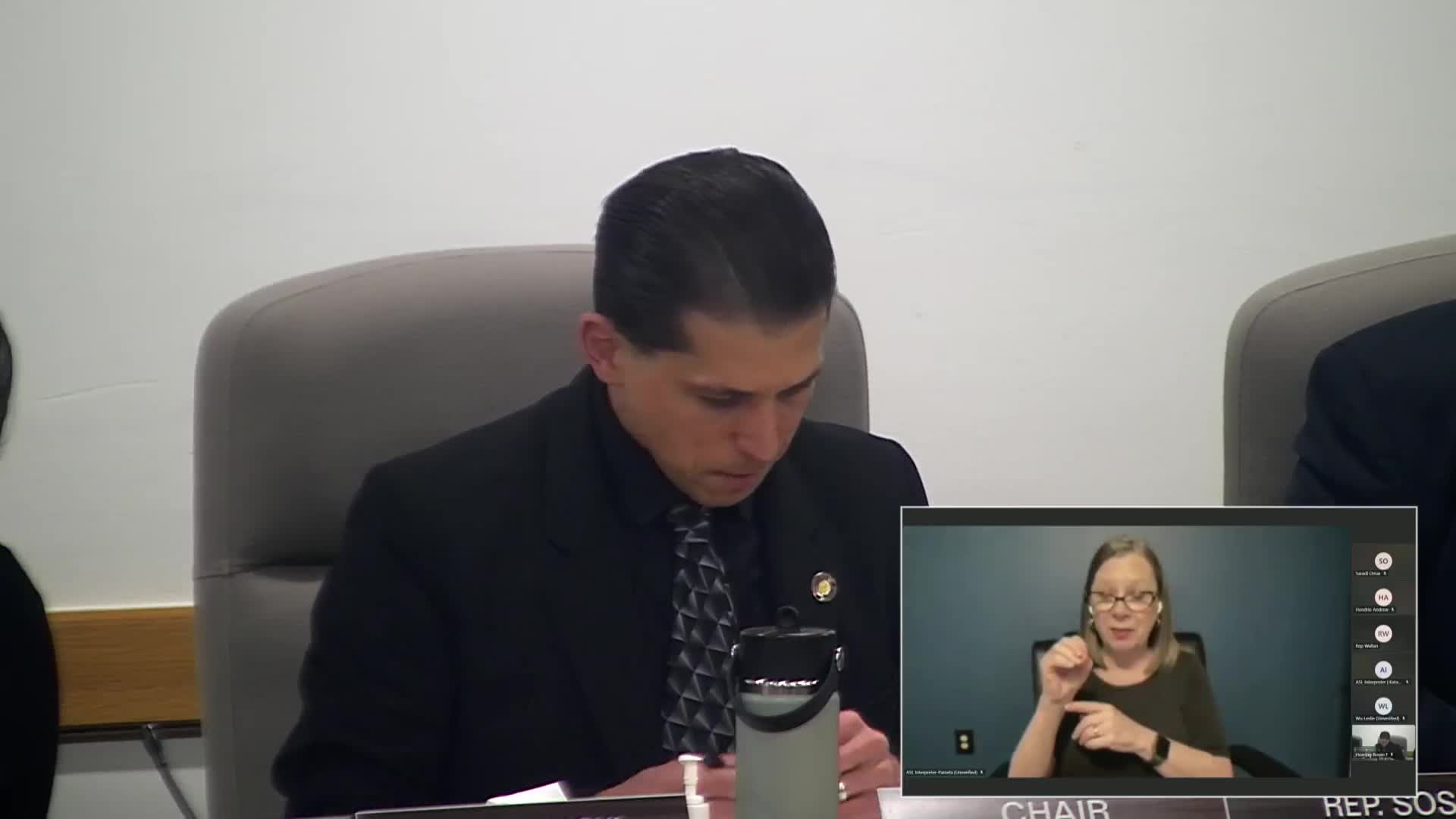
During the work session Representative Vice Chair Osborne moved adoption of the dash-3 amendment, which would have added a prescriber-authentication limitation for repairs of equipment obtained by prescription. Vice Chair Osborne said he feared the amendment could leave disabled users at risk if another layer of authorization delayed repairs. State Sen. Janine Solomon, who worked with advocates on the bill, told the committee the amendment would create an additional barrier for people already experiencing delays obtaining timely repairs. Solomon said most people obtain manufacturer repairs because insurance covers them, and that the bill is intended to give owners choice: "What this bill boils down to is freedom of choice," she said.
Representative Reschke said she favored the amendment as a protective measure but ultimately voted no on the amendment; the amendment failed on roll call. The committee then voted to move the base bill to the floor with a due-pass recommendation; Chair Sosa assigned Representative Marsh as the House carrier.
Committee discussion noted liability and consumer-protection concerns: Representative Walters asked who would be liable if a consumer or independent repair provider improperly repaired equipment and the user was injured; Senator Solomon replied that ordinary business-liability principles would apply and that the bill limits manufacturer liability for certain indirect or consequential damages. Members also raised the prospect that delays in disputes over what repairs are within scope could have real consequences for users who rely on their mobility equipment.
No formal direction to staff or additional amendments were adopted during the work session; the committee closed the session after voting to advance the bill.