Get Full Government Meeting Transcripts, Videos, & Alerts Forever!
Get email alerts on the Vehicle Data topic
No spam. Unsubscribe anytime.
House passes bill clarifying use and sharing of police collision data
Summary
The Oregon House voted to pass House Bill 21‑55, which expressly permits local law enforcement to use VIN‑level collision information for investigatory purposes and to share VIN‑specific collision data with authorized contracted service providers while excluding release of personally identifying information.
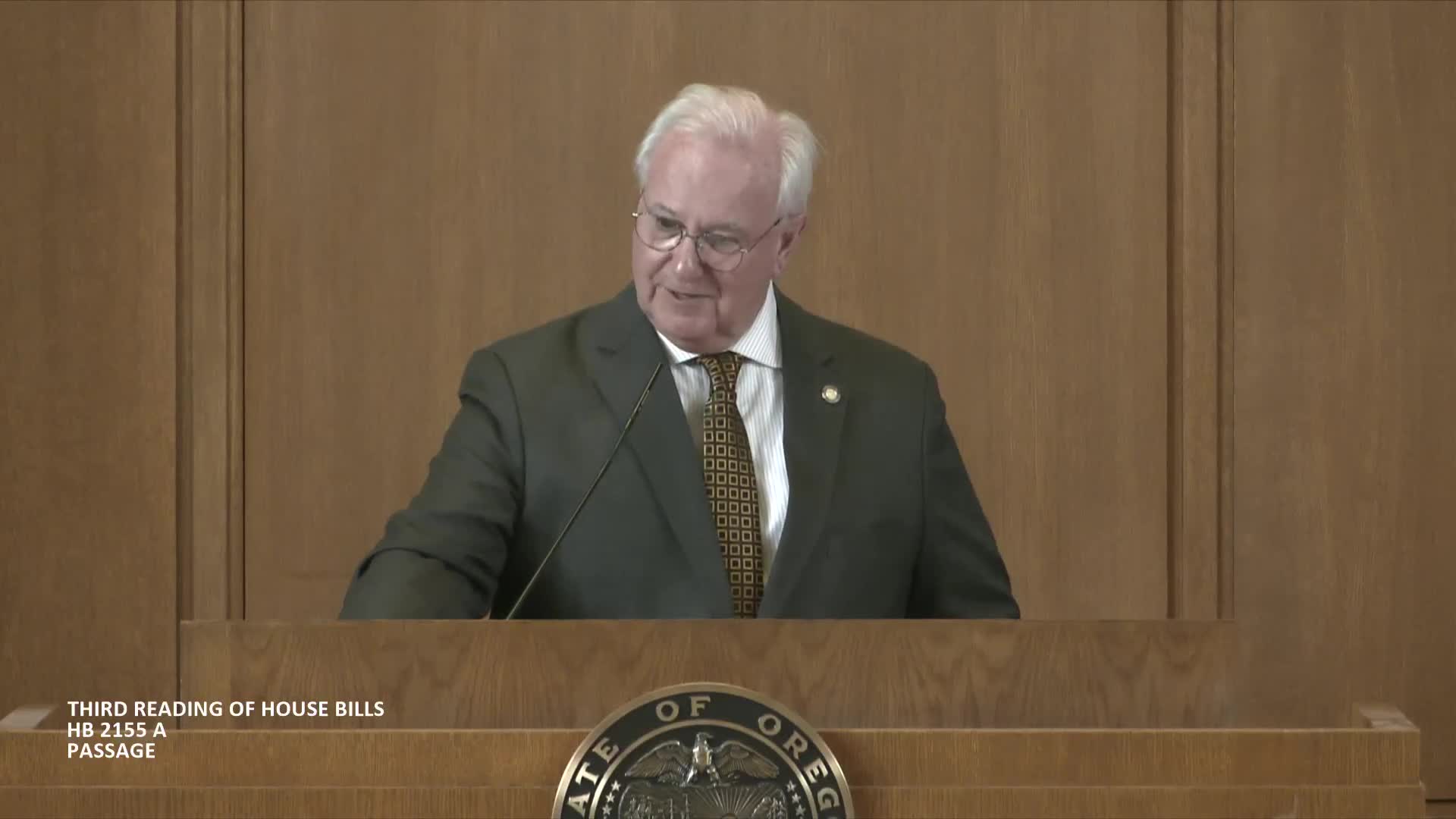
House Bill 21‑55 cleared the House Wednesday, giving Oregon law explicit guidance on how local agencies may use and share vehicle collision records. Representative Tina Bosshardt Davis, carrying the bill on the floor, said the measure resolves uncertainty about whether local law enforcement may use collision information for investigations and whether they may share VIN‑level collision records with contracted services such as VIN‑history providers.
Why it matters: Consumers, investigators and dealers rely on accurate vehicle history information to spot vehicles with hidden damage or safety issues. Supporters argued the bill protects personal privacy while enabling law enforcement and private services to improve consumer safety.
Representative Tina Bosshardt Davis, member of the joint Transportation Committee, said the bill “brings much‑needed clarity and transparency to how Oregon's local law enforcement agencies can use and share vehicle collision information.” She told colleagues the measure “expressly permissibly permits the use of collision information originated and collected by local law enforcement agencies for investigatory uses.”
The bill restricts the authorized sharing to vehicle identification number (VIN)‑level data and explicitly excludes personal identifiers such as Social Security numbers, driver license numbers, passport information or financial data from release to contracted providers. Bosshardt Davis said existing Oregon privacy protections in statute remain in force and that the bill does not expand data collection; instead it removes ambiguity so jurisdictions may participate in programs that benefit public safety and consumers.
The bill was reported unanimously from the joint Transportation Committee and passed on third reading after floor remarks; the clerk declared it passed after voting. No amendments were described on the floor, and the carriage of the bill did not include extended debate.
The House action finalizes statutory language clarifying local agency authority to use internally held collision records for investigations (including fraud and theft investigations) and to share VIN‑level damage information with authorized contracted service providers while preserving limits on release of personally identifying information.