Get Full Government Meeting Transcripts, Videos, & Alerts Forever!
Get email alerts on the Maritime Pilots Fee Increase topic
No spam. Unsubscribe anytime.
Subcommittee ratifies maritime pilots operations fee increase; board says change needed to avoid reserve shortfall
Summary
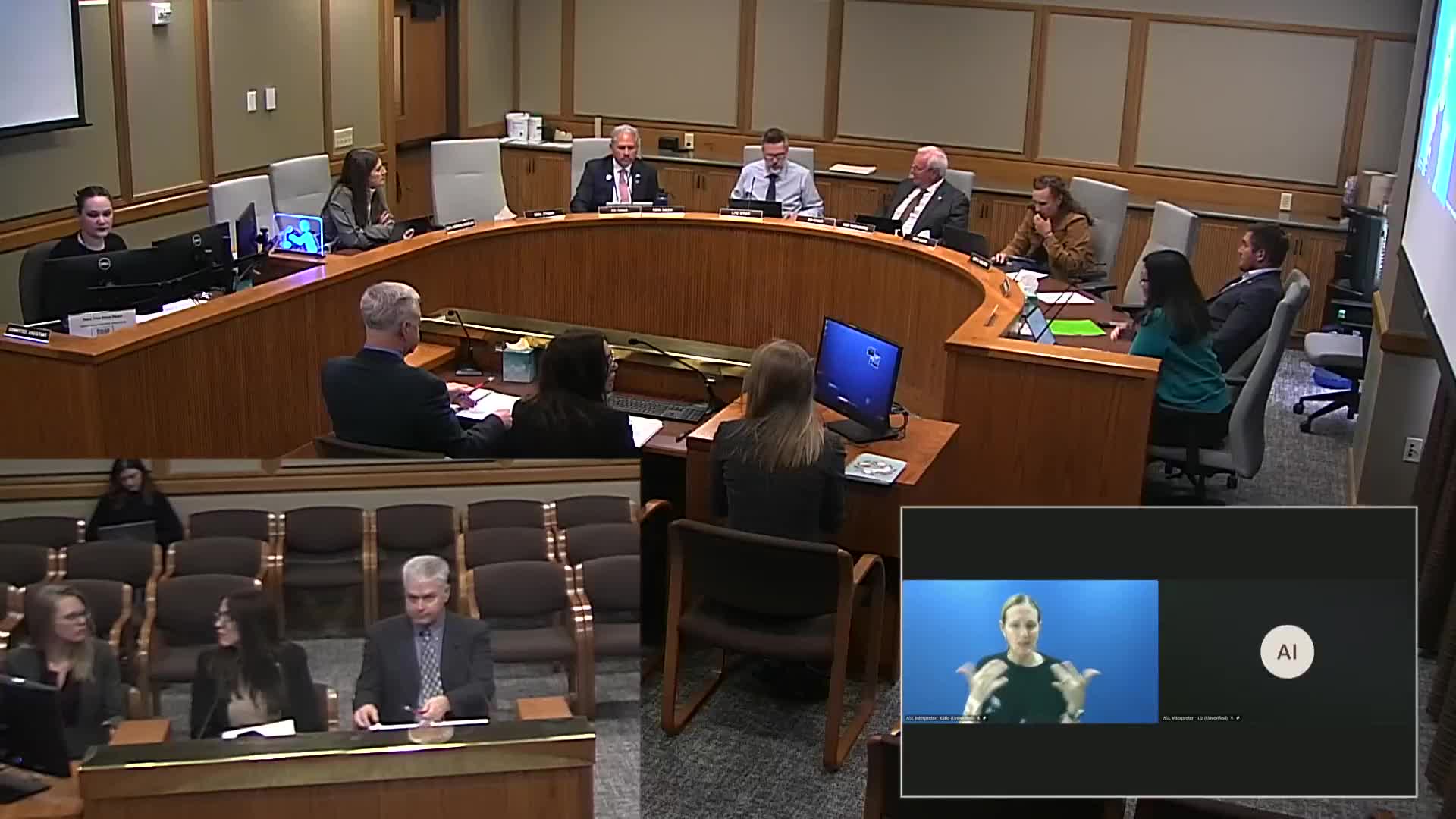
The Joint Committee on Ways and Means Subcommittee on Transportation and Economic Development voted May 20 to adopt the Legislative Fiscal Office's recommendation and forward House Bill 5,042 after ratifying an administrative rule that raises the Oregon Board of Maritime Pilots' operations fee from $50 to $70, effective July 15, 2025.
The Joint Committee on Ways and Means Subcommittee on Transportation and Economic Development voted May 20 to adopt the Legislative Fiscal Office's recommendation and a Dash 2 amendment to House Bill 5,042, ratifying an administrative rule that raises the Oregon Board of Maritime Pilots' operations fee from $50 to $70 effective July 15, 2025.
Tom Griffiths, executive director of the Oregon Board of Maritime Pilots, told the subcommittee the board's operating budget is funded primarily by pilot licensing fees and an operations fee charged to ships. "We need to raise our revenue," Griffiths said, explaining that personnel and Department of Justice costs make up the large share of the board's expenses and that the operations fee had not changed since it was authorized in February 2013. Griffiths said the board set the administrative rule in January 2025, there were no public comments during the rulemaking process and the board approved the rule unanimously.
LFO materials presented to the subcommittee state the fee increase is expected to generate a total revenue of $964,639 and to provide the board with a recommended three-month operating reserve. Mr. Ruff of the Legislative Fiscal Office told members the statutory fee cap had originally been $100 and is automatically adjusted by CPI; agency rules currently list a higher figure reflecting CPI adjustments. LFO recommended adoption of the Dash 2 amendment to provide the enabling legislation required by statute for agencies that adopt fees between regular legislative sessions.
Representative Kate asked for clarification on the revenue math and the number of ship transits used to project revenue. The executive director said ship transits vary from year to year and provided approximate historical counts: "ships per year is about between 2,000, 2 thousand 5 hundred," and said the board projects operations-fee revenue in the mid-hundreds of thousands of dollars. Griffiths noted that in AY25 operations-fee revenue collected was about $422,000 and that the operations-fee revenue projection included the effect of the $20 increase; LFO staff confirmed the figure quoted in the work materials was total projected revenue, not an amount in addition to existing revenue.
After brief discussion the subcommittee adopted the Dash 2 amendment without objection and moved House Bill 5,042 to the full Ways and Means Committee with a due-pass recommendation. Co Chair Gomberg said the bill will be carried to the House floor by Representative Watanabe and to the Senate floor by Senator Neron Mislan.
The record shows the board is planning to monitor revenue and ship traffic and to revisit the fee if needed later in the biennium. Griffiths told the committee the board's target operating reserve is in the three- to six-month range and that, based on current projections, the increase should bring them into the recommended reserve range.