Get Full Government Meeting Transcripts, Videos, & Alerts Forever!
Get email alerts on the Construction Noise topic
No spam. Unsubscribe anytime.
Council denies overnight construction noise variance for Haslet Crossing project
Summary
The Haslet City Council rejected a request from Stream Realty Partners to allow pre-dawn concrete pours at the Haslet Crossing warehouse site, after residents described sleep, health and safety impacts. Council voted to uphold existing construction-hour limits.
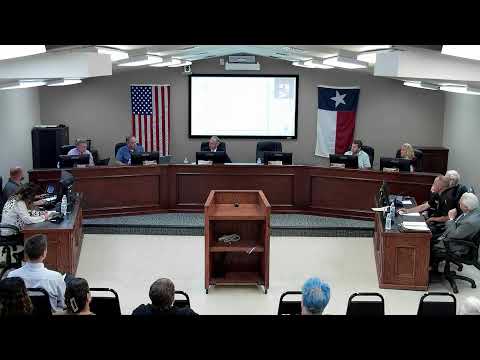
The Haslet City Council on May 19 denied a developer request to allow early-morning concrete pours and other work at the Haslet Crossing construction site, citing strong resident opposition and the city’s current noise ordinance.
The variance request came from Stream Realty Partners; Blake Bell, a member of the Haslet Crossing development team, asked the council for authorization to start large-format concrete pours before sunrise from May through the fall, to reduce daytime truck traffic, shorten the construction schedule and limit heat exposure for workers.
The request prompted extensive public comment from residents of the neighboring Caraway subdivision. Laura Schlatteroff, who submitted a written appearance signed by eight neighbors, told the council, “Granting this variance would be very disruptive to the quality of sleep for the residents along Wildson Way,” and called a proposed 1 a.m. start time “unreasonable.” Tracy Bridge said the overnight noise would make it impossible for her to sleep after working late shifts. Michael Belcher, a veteran, said the pounding and shaking would aggravate his post‑traumatic stress disorder. Other neighbors described barking dogs, light intrusion and the pervasive sound of heavy tracked equipment.
Blake Bell outlined the scope and mitigations: the Haslet Crossing site is about 35 acres north of the Caraway subdivision, between Pask Drive and Haslet Parkway and between Intermodal Parkway and Harmon; the development team said the “most painful” phase would run May through July and that structural slabs and tilt walls would require concentrated pours. Bell said trucks would be routed to the north, washout points would be placed as far north as feasible, light towers would not point south toward homes, and that backup alarms could be replaced by flaggers in certain on‑site situations.
City staff and council members questioned several elements of the plan. One council member noted the city ordinance currently allows construction to begin only 30 minutes before sunrise; others asked whether the developer truly needed the earliest hours and how often pours would occur. Bell said the project team expects to complete most major structural concrete by September if early starts are allowed, and estimated 2–3 pours per week rather than daily pours if larger pours are permitted.
During the public hearing, multiple residents asked who to contact with complaints; staff responded that the developer should provide a 24‑hour contact and that the city would enforce the ordinance. A resident asked whether OSHA required backup alarms; staff replied that OSHA does not require horns if flaggers or observers are used, and noted the Texas Department of Transportation has similar language.
After discussion, Mayor Halsey moved to deny the variance request “as presented and adhering to the ordinance we have in place.” The motion was seconded; the council recorded four votes in favor of denial and one opposed, and the motion passed. The denial means the developer must continue to operate within the city’s existing construction hours (30 minutes before sunrise through 30 minutes after sunset) unless the council approves a different variance in the future.
Council members and staff said they remain open to working with the developer on measures to reduce resident impacts during permitted hours, and staff indicated the developer should provide a 24‑hour contact for complaints and adhere to the mitigation commitments discussed in the meeting.