Get Full Government Meeting Transcripts, Videos, & Alerts Forever!
Get email alerts on the Public Safety 911 Funding topic
No spam. Unsubscribe anytime.
Cities tell Dearborn County commissioners 911 allocation is unfair as dispatch budget faces nearly $1 million shortfall
Summary
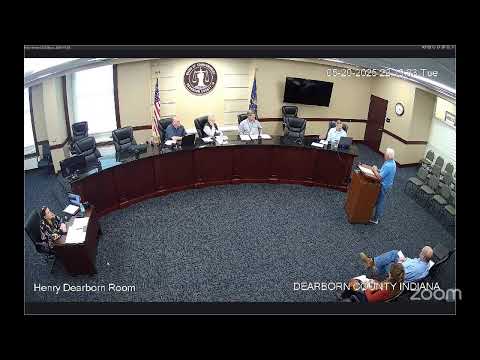
City representatives told the Dearborn County Board of Commissioners on May 20 that the county-run 911 dispatch budget leaves a roughly $980,000 shortfall and that the current cost-sharing formula places an outsized burden on three cities that generate the majority of police calls.
City representatives told the Dearborn County Board of Commissioners on May 20 that the county-run 911 dispatch budget leaves a roughly $980,000 shortfall and that the current cost-sharing formula places an outsized burden on three cities that generate the majority of police calls.
Why it matters: The county'wide 911 operations budget discussed at the meeting was reported as $1,790,000; wireless/cell-phone fees account for about $813,000 of that, leaving the shortfall. City representatives said their three cities generate about 55% of police calls despite representing about 26% of the county population, and that the county currently allocates money using a state-directed DLGF formula tied to property levies rather than call volume.
A Greendale city representative identified in the record as "Ben" told commissioners, "We are being charged the lion's share of the calls," and said the three cities together generate about 16,300 police calls, or roughly "1.23 calls per resident," compared with about one call per three residents in the rest of the county. Ben said the disparity leaves the cities paying a disproportionate share of the dispatch shortfall through the county general fund.
Officials and city leaders discussed several options that were raised at the meeting but took no formal vote. Ideas mentioned included: covering the shortfall from the county general fund to spread cost across the whole county; a modest increase to the local safety levy (described repeatedly in the record as a 0.06 increase) to direct more revenue to the 911 center; doubling the state wireless/cell-phone surcharge (the "cell phone fee") that funds 911; pursuing state legislation to raise the cap on the wireless surcharge; and forming interlocal agreements that allocate operating costs differently. The Jefferson County / City of Madison interlocal was offered as an example of a different allocation approach, where the city pays a defined share of operating costs.
County staff and other officials offered procedural clarifications recorded in the meeting: the distribution of safety-levy funds is determined by a formula from the state's Department of Local Government Finance (DLGF), the county is the single public safety answering point (PSAP) for the county (making separate city PSAPs impractical without major change), and 25% of some local safety levy revenue may not be captured locally because of where residents work or live across jurisdictions. Randy Maxwell and a county staff member identified as Jim were cited in the discussion as having reviewed county finances and the regional picture.
Speakers repeatedly noted the practical limits on quick changes: local options such as interlocal agreements can help but cannot immediately replace the current funding mechanism, and raising the state wireless surcharge or changing DLGF distribution rules would require action at the state level. Several speakers said they will pursue legislative avenues next year; Tyler Warman of the commissioners' association and other statewide contacts were described as receptive to raising the wireless fee.
No formal motion to change the funding method or levy was made at the meeting. Commissioners and city representatives agreed to continue discussions and to explore coordinated, multi-jurisdictional approaches and possible state-level changes in the coming year.