Get Full Government Meeting Transcripts, Videos, & Alerts Forever!
Get email alerts on the Sanitation Fee topic
No spam. Unsubscribe anytime.
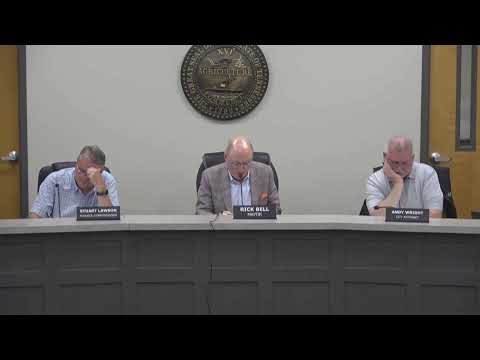
Lebanon council approves first reading of $20 monthly sanitation fee after public concern about impact on seniors
Summary
After extended public comment and council debate about equity and transparency, the Lebanon City Council approved a first reading to establish a new sanitation fee — $20 monthly for residential accounts and $40 for commercial — while noting further study of utility rates will continue later this year.
The Lebanon City Council approved a first reading on a new sanitation fee on a voice vote after a night of public comment and lengthy council discussion about who would bear the cost.
The measure, introduced as Order No. 257203, would add a $20 monthly sanitation fee to residential utility bills and $40 for commercial accounts; councilors approved the first reading without recorded opposition. Stuart Lawson of commercial finance revenue and Regina Santana, utilities director, were listed in the motion presentation.
The change matters to residents who fear the fee will be attached to monthly Lebanon utility bills and affect people on fixed incomes. Elizabeth Spencer, a Ward 2 resident, asked directly, “I’m wondering if those fees will be attached to our Lebanon utilities or our, property taxes. … that’s gonna be a hardship for lot of seniors and people on, fixed incomes.” Her question set the tone for a series of public comments urging more analysis and protections for low-income and elderly residents.
Several residents voiced similar concerns. Adrian Martinez, who identified himself as an immigrant and landlord on West Spring Street, said, “Maybe we can implement that garbage fee with [new developments] first and see how it works out,” and urged the council to avoid immediately imposing the fee on lower-income households. Luis Martinez asked for clarity about what additional services — if any — would accompany the fee and whether the city was “double dipping” by charging fees in addition to property-tax–funded services.
Council debate focused on timing, transparency and alternatives. Councilor Jerry Ashley said he was “perplexed” the city had not charged a separate sanitation fee before and cautioned that a 15-minute work-session discussion was not sufficient notice for a policy that could affect low-income wards and seniors. Councilor Camille Burdine said she was not prepared to support the fee until the council had “some…research” and more time to review impacts and protections for residents on fixed incomes.
Other councilors framed the fee as a long‑overdue correction to a service operating “in the red.” Councilor Bridal said the city should have phased in such a fee years ago and offered to reduce his own rental income to cover the cost for tenants, saying, “I’m willing to drop my rent that I charge my tenants $20 or more to cover this sanitation fee.” Councilor Phil Moorhead (appearing as Moorhead in roll call) noted the city will now offer recycling for free and repeated that the fee is intended to address ongoing sanitation costs.
Councilors and staff described how the fee level had been calculated from cart counts and budgeted sanitation costs. Council members also said a broader utility-rate study will start later this summer focused on water and sewer rates; sanitation was not the primary focus of that study but can be examined separately.
The first-reading approval moves the fee to a second reading. Councilors noted the second reading will provide another opportunity for public input and the council to consider additional protections for seniors or low‑income households and to clarify whether the fee will be billed via Lebanon utility accounts or otherwise. The ordinance text and final effective date will be set if and when the council approves the second reading.
Proponents and critics agreed on one procedural point: several councilors asked for more comprehensive financial details and for staff to provide clearer documentation of how the fee amount was derived and the projected city revenue impact.
The council did not adopt a specific exemption or hardship program during the first reading; council members said those details would be discussed in subsequent meetings if the ordinance advances.