Get Full Government Meeting Transcripts, Videos, & Alerts Forever!
Get email alerts on the School Budget topic
No spam. Unsubscribe anytime.
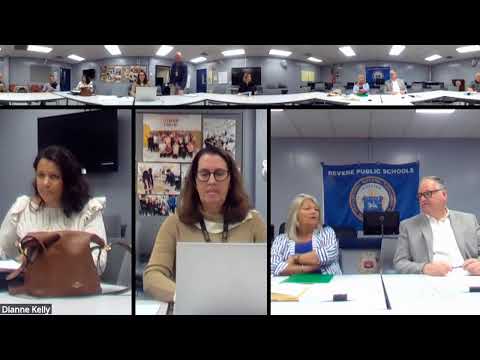
Revere subcommittee weighs cuts as schools face $3.4 million shortfall; members push to restore health aides and retain JROTC staffing
Summary
The Revere Public Schools ways-and-means subcommittee reviewed a $3.4 million projected deficit and debated restoring health aides and maintaining JROTC instructor levels while weighing transportation and coaching reductions and use of district reserves.
The Revere Public Schools ways-and-means subcommittee reviewed a projected $3.4 million budget shortfall and debated whether to restore school health aides and preserve JROTC staffing as members explored deeper cuts to transportation and non–student-facing positions.
Subcommittee Chair John Kingston opened the discussion saying, “I would like to put those positions back in the budget,” referring to health aides that he called an important support for nurses. Kingston said he also worried about cutting the JROTC instructor roster and described the program as “one of the nicest programs we have at the high school.”
Superintendent Dr. Kelly told the committee the district’s “initial working deficit is $12,300,000” and that after carryover and reductions the bottom-line shortfall they were working from was about $3.4 million. Dr. Kelly said the JROTC instructor salaries are split with the Army—“we each pay 50% of the cost”—and noted enrollment declines have reduced the number of required instructors.
Committee members repeatedly raised transportation as a major driver of the deficit. Dr. Kelly said a recent mayoral change increased the deficit by roughly $258,000 through an item identified as Schedule 19; she also repeated a clarification from a Department of Elementary and Secondary Education meeting that “state law actually says you only need to transport kids in kindergarten through grade 6.” That clarification prompted members to ask for a focused follow-up discussion with state and city officials.
On personnel, members discussed several options: reinstate health aides (which participants said would add several hundred thousand dollars to the budget), keep JROTC at two instructors rather than three, and evaluate district-wide coaching positions. One member summarized the trade-offs: coaches provide in‑classroom professional development that district leaders say contributes to Revere’s ratings, while health aides were initially hired to address COVID-related needs but remain in some schools to support coverage.
Dr. Kelly and staff outlined staffing counts and other numbers cited in discussion: the district expects to have roughly 14–15 nurses with a recommended ratio of one nurse per 750 students; the district’s half-cost for two JROTC instructors was reported as about $64,000 each (including benefits); and past health‑aide annual costs were discussed in the range of roughly $360,000 for the program as staffed in prior years. Committee members asked for clearer spreadsheets showing “A/B/C” scenarios (items they agree on, items they question, and items for further review).
Members and staff emphasized the role of the district reserve and the Student Opportunity Act (SOA) funding timeline. Dr. Kelly said the district has been holding a reserve target (a multiyear goal of roughly $10 million) and warned that the committee was already looking at using about $3.5 million of that reserve this year; members said they preferred avoiding reserve draws if possible because SOA funding will taper in coming years.
No formal votes were recorded during the subcommittee meeting. Instead the group directed staff to prepare additional detail: revised budget scenarios showing impacts of reinstating health aides or JROTC positions, a clearer accounting of anticipated carry‑forward dollars, and a transportation analysis tied to state law and Schedule 19 implications. Dr. Kelly and members also agreed to schedule a follow‑up meeting with DESE and the mayor’s office for deeper discussion.
The subcommittee did not approve any cuts or restorations at the meeting; members said they would present a recommended target for additional reductions (one member suggested exploring reductions that would reduce the deficit to about $1.7 million, using carry‑forward and targeted cuts) and return with refined options for the full school committee and the city appropriation process.