Get Full Government Meeting Transcripts, Videos, & Alerts Forever!
Get email alerts on the Zoning Rewrite topic
No spam. Unsubscribe anytime.
Lebanon planning staff outline broad zoning rewrite, recommend rules for data centers, sidewalks and billboards
Summary
City planning staff presented a draft rewrite of Lebanonzoning code that would expand open-space and tree-preservation requirements to commercial and industrial districts, define and restrict data centers by size and district, clarify sidewalk payment rules and address a potential unintended expansion of billboard allowances.
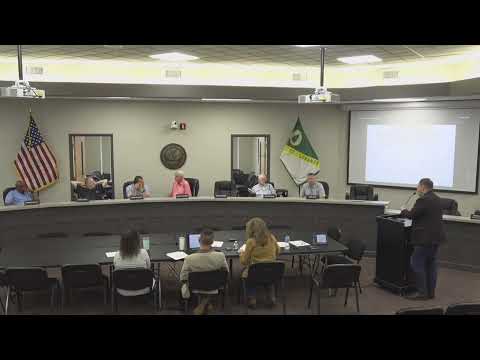
Planning staff told the Lebanon Planning Commission on an ordinance-review hearing that the city is moving to update its zoning code to reflect changes such as growing interest in data centers, new development patterns and unresolved gaps in existing rules.
"The computer and data processing would be less than 5 acres, and the data centers would be more than 5 acres," planning staff said, explaining a proposed size-based distinction between smaller data-processing uses and larger data centers. Staff recommended treating data centers as a conditional use in light industrial zoning and giving the commission a choice to also allow them in a transportation/warehousing district.
The change comes after staff said the older code did not differentiate between small server operations and large-scale data centers and that the design standards for commercial districts (brick, masonry and transparency requirements) do not make sense for data-center facilities. Planning staff said internal benchmarking and outreach to nearby municipalities such as Gallatin are underway.
Staff also proposed expanding open-space and tree-preservation requirements to commercial and industrial developments. "If you get a larger development that's commercial or industrial ... will all have standards on what kind of usable open space is going to be required of them," staff said.
On sidewalks, staff recommended clarifying when the city may require sidewalks or accept a payment in lieu. Using a recent Tennessee court ruling as guidance, planners said the city can require sidewalks where both an origin and a destination are reasonably established and that payment in lieu would be used where a property benefits from an existing or committed sidewalk project. "If they're proposing a complex ... then we will have established an origin and a destination, and that's when we'll require a sidewalk," staff said.
The rewrite flagged an unintended consequence for billboards: eliminating an old industrial-zoning label (IP) could inadvertently make large stretches of highway-adjacent property eligible for new billboards under existing sign rules. Staff proposed limiting new billboards to properties close to the interstate and leaving heavy- and light-industrial districts as the primary allowed locations, with spacing and state-permit checks. "Mostly what I'm hearing from this group is that we're not really thrilled about having a ton of more billboards," one commissioner said during discussion.
Staff asked the commission whether to map a new mixed-housing district or leave the district available by rezoning application. Staff noted the existing infill overlay and RD-9 areas and recommended converting RD-9 parcels inside the infill boundary to the new mixed-housing district to align zoning with the city's infill strategy.
No formal vote was taken; staff said they will revise language based on the commission's input and return with updated draft ordinance language at a follow-up meeting. Staff recommended a future schedule that would bring the ordinance to the commission for final consideration once those revisions are complete.