Get Full Government Meeting Transcripts, Videos, & Alerts Forever!
Get email alerts on the Land Use Rezoning topic
No spam. Unsubscribe anytime.
City releases Dixie Highway outreach findings; residents favor moderate density and community‑led growth
Summary
City staff and consultants summarized seven months of outreach on rezoning and redevelopment along Dixie Highway, highlighting community priorities for affordable housing, walkable mixed‑use corridors, preservation of faith institutions and upgrades to parks, transit stops and sidewalks.
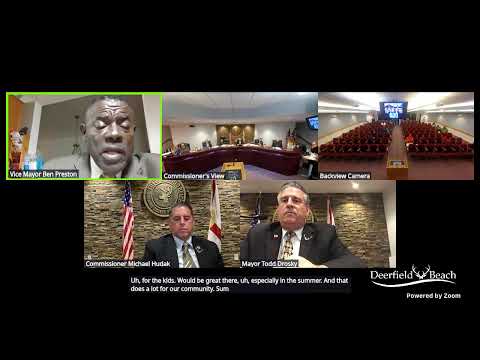
On May 20, 2025, city staff and consultants presented a summary of findings from the Dixie Highway community outreach and rezoning project to the Deerfield Beach City Commission, reporting results from a seven‑month engagement process designed to inform zoning changes for Dixie Highway, Hillsborough, Fourth and Tenth streets.
Bernard Jones, redevelopment project coordinator for the city, and Lisa Martinez, CEO of LM Genuine Solutions, summarized community workshops, focus groups, door‑to‑door canvassing and a kickoff meeting. Martinez said a consistent community vision emerged: "Growth must honor the corridor's historic, cultural, and civic legacy," and residents consistently asked that revitalization support legacy residents, businesses and institutions.
The team's report identified six themes: housing and neighborhood character; local businesses and mixed‑use corridors; infrastructure, parking and mobility; parks, green spaces and civic gathering areas; faith institutions and cultural preservation; and youth, families and community life. Specific community preferences included supporting three‑to‑four‑story heights for most areas, conditional support for higher density (30–60 units per acre) near transit if affordability and design protections are provided, upgrades to sidewalks and bus stops with ADA access and shade, and programs to support legacy small businesses and faith‑based institutions.
City staff said the findings will inform WGI's forthcoming zoning‑code rewrite and can be used to prioritize capital investments and community programs. Commissioners praised the outreach and urged continued partnership with legacy landowners, churches and neighborhood groups. Commissioner Hudak called the effort a "partnership with the community" and recommended the city sustain engagement beyond the code rewrite.
Next steps identified by staff include using the findings to guide WGI's zoning revisions, integrating priorities into budget and investment planning, and continuing collaboration with the host committee and community stakeholders.