Get Full Government Meeting Transcripts, Videos, & Alerts Forever!
Get email alerts on the Civil Rights Policy topic
No spam. Unsubscribe anytime.
Resident urges board to restore named protected classes in policy language; board sets five NEOLA policies for June approval
Summary
A resident urged the Little Miami board to return specific protected-class listings to updated NEOLA policy language; board members noted the first reads and directed five state-mandated policies for June approval.
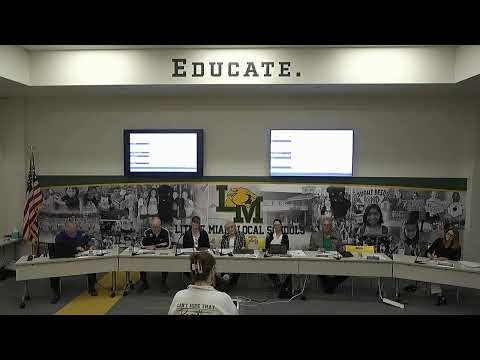
Resident Mandy Labovitch told the board during public comment that proposed NEOLA policy updates removed the specific listing of protected classes and left only a generic reference to “protected classes,” and she asked the board to reinstate the specific categories.
“By listing protected classes, such as race, color, religion, gender identity, pregnancy, sexual orientation, disability, age, national origin, military status, and genetic information, we are not just citing legal categories,” Labovitch said. “We are affirming a simple but powerful truth that every student, every teacher, and every staff member deserves to learn and work in an environment free from discrimination and harassment.”
Labovitch said omitting the named groups creates ambiguity and can weaken the district’s ability to respond when harm occurs. She urged the board to “add the specific classes I listed back into policy language.”
In response to the first-read agenda item on policy updates, district staff explained NEOLA’s numbering and that some policies appear duplicated because NEOLA separates classified, certified and administrative policy numbering. The board also discussed timing: five NEOLA policies (identified by their internal numbers during the meeting) are state-mandated and will be placed on the June agenda for approval to meet a July 1 legal deadline.
Board members and staff directed the public to the agenda packet online for the first-read policy drafts and encouraged constituents to review them prior to the June vote. No policy changes were adopted at the May meeting; the items were presented as first reads and scheduled for future action where required.
Ending: The board set the five state-mandated policies for approval on the June agenda and invited the public to review the documents linked to the board agenda before the next meeting.