Get Full Government Meeting Transcripts, Videos, & Alerts Forever!
Get email alerts on the Data Centers Annexation topic
No spam. Unsubscribe anytime.
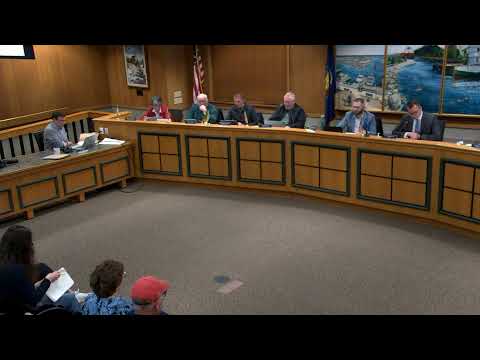
Council approves annexation, land-use changes for proposed data center campus
Summary
On May 20, 2025, the Port Washington Common Council approved annexation of about 562.385 acres from the town of Port Washington, a companion comprehensive-plan amendment covering roughly 1,910 acres, and permanent rezoning of roughly 489.54 acres to an I‑3 Technology Campus District to accommodate a proposed multi‑building data center campus.
Port Washington — The Port Washington Common Council on May 20 approved a petition to annex approximately 562.385 acres from the town of Port Washington, assigned a temporary I‑3 Technology Campus zoning to the annexed land, amended the city’s comprehensive plan to designate about 1,910 acres for business‑park and industrial uses, and adopted a permanent rezoning for roughly 489.54 acres to I‑3 to accommodate a proposed multi‑building data center campus.
The actions followed staff and Plan Commission recommendations and a Department of Administration review that the annexation “is in the public interest.” Robert Harris, the city’s director of planning and development, told the council the Plan Commission had unanimously recommended approval in April and that state review found the annexation met contiguity and serviceability standards. “This was an annexation that was at the Plan Commission at its April meeting, and the Plan Commission recommended unanimously to approve that annexation,” Harris said.
City staff presented the annexation petition from R and B Carl’s Farms and noted the applicant for the rezoning is Red Granite Development Company. Attorney Chris Smith, special counsel on the project, asked the council to adopt three minor edits to the annexation ordinance to correct the statutory citation, add the Department of Administration determination to the ordinance text, and clarify the annexed population count (23 persons, of whom 20 are electors and 3 are children). Smith characterized the changes as technical clarifications that do not change the scope of the proposal.
Members of the public raised concerns during the meeting’s public‑comment period about the scale, energy use and local impacts of data centers. Caleb Tydrick, identified in the record as a resident of Wyler’s Way in the town of Port Washington, questioned whether the city had assessed energy and water impacts and suggested the city require assurances about end uses. “The goal for 3 and a half gigawatts of power is so audacious,” Tydrick said, adding that he wanted assurances that taxpayer‑subsidized infrastructure would not support technologies used in weapon systems. Ben Donakowski, another resident, warned the project’s potential build‑out — the council’s comprehensive‑plan map references about 1,910 acres — is “massive,” and asked how noise, environmental and neighbor impacts would be monitored and enforced.
Council members framed their vote around municipal land‑use process and prior planning history. Harris walked the council through prior city plans dating back several decades that had repeatedly identified the southern portion of the project area for industrial or business‑park uses. The council also discussed public‑notice and review processes; Smith and city staff told the council they had reviewed notice requirements and had satisfied statutory obligations.
On each ordinance — annexation, comprehensive‑plan amendment and rezoning — the council moved, seconded and passed the measures by voice vote. The annexation ordinance adopted the temporary I‑3 designation for the annexed acreage; the comprehensive‑plan amendment applied a business‑park/industrial future‑land‑use designation to the broader project area; and the rezoning ordinance converted the identified acreage to a permanent I‑3 Technology Campus District, a zoning classification that allows data centers and supporting uses.
The council record shows the city will now proceed under the new land‑use designations and zoning; future permitting, site plans, utility agreements and any developer commitments would follow those land‑use approvals. The petitioner and city staff remain the primary contacts for implementation details.