Get Full Government Meeting Transcripts, Videos, & Alerts Forever!
Get email alerts on the Public Works Water topic
No spam. Unsubscribe anytime.
Pastor asks Lake City to allow water access for neighborhood garden; staff recommends hydrant meter
Summary
Mount Pisgah AME Church requested permission to use a water line or a fire‑hydrant meter to water a community garden on a vacant lot. City staff explained ordinance requires an occupied structure for a permanent meter, cited backflow and contamination concerns, and recommended a refundable hydrant meter deposit of $1,500 as the quickest solution.
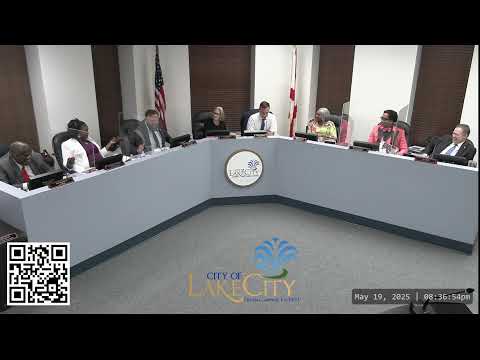
A pastor who runs a free community garden asked the Lake City City Council on May 19 to allow the church to access a water line on an adjacent vacant lot or to allow a water meter on a nearby fire hydrant so the garden can be watered without running hoses across the street.
Pastor John Ingram told the council the garden—named for local educator Corinne Lofton—provides produce to roughly 100 families in the neighborhood and the church had been transporting water in 15‑gallon containers. He asked either permission to attach to a water meter on the vacant lot the church owns or to use a fire‑hydrant meter in front of the garden. “This garden is a food source for our neighborhood,” he said.
Staff response and legal limits: City staff explained the municipal ordinance requires a structure on a parcel to receive a permanent meter; that rule was adopted to avoid unpermitted structures and contamination risks. Public Utilities staff emphasized backflow prevention is required on any connection to prevent cross‑contamination.
Practical solution and cost: Public Works staff recommended the temporary fire‑hydrant meter as the quickest and lowest‑risk fix. Hydrant meters are above ground, available quickly and are removable at the end of the season; the city charges a refundable deposit (discussed at $1,500) to secure the meter in case of theft or loss. Utility staff confirmed the deposit is refundable when the meter is returned. City staff also said any metered water usage will be billed as water use — the church currently pays for water when it routes through the church’s meter.
Council direction: Council members expressed support for helping the garden while cautioning against changing the city’s main ordinance for vacant lots because of broad implications. Vice Mayor Young offered to help find sponsorship to cover the hydrant meter deposit. City staff recommended the hydrant meter option as the staff preference; the council asked staff to work with the church to implement a hydrant meter solution as a seasonal accommodation while preserving overarching ordinance rules.
Next steps: Public Works staff will provide the pastor with details on the hydrant‑meter deposit, arrange meter availability, and confirm the billing process. The council did not change the ordinance at the meeting.