Get Full Government Meeting Transcripts, Videos, & Alerts Forever!
Get email alerts on the Historic Preservation Zoning Rock Street topic
No spam. Unsubscribe anytime.
Neighbors and commissioners raise historic-district and zoning concerns over proposed Rock Street conversion
Summary
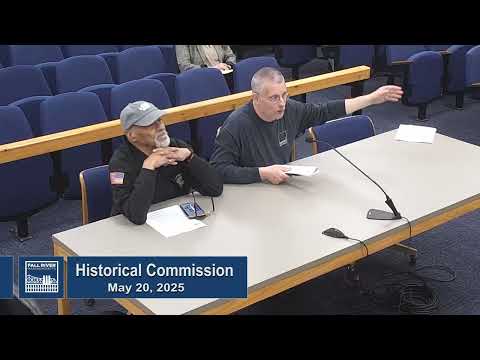
Homeowners and members of the Fall River Historical Commission pressed the commission on May 20 over two related issues: a proposed conversion of 550–570 Rock Street into multiunit housing and an apparent, previously unnotified change to the Highlands Local Historic District boundary.
Homeowners and members of the Fall River Historical Commission pressed the commission on May 20 over two related issues: a proposed conversion of 550–570 Rock Street into multiunit housing and an apparent, previously unnotified change to the Highlands Local Historic District boundary.
The most immediate matter was a zoning board of appeals application by Rockview LLC to convert properties at 550 and 570 Rock Street into a 15-unit apartment complex (later revised to a proposed 12 units). Resident and homeowner Jason Caminiti asked the commission to consider referring the matter to the council and to request elevation drawings, traffic studies and other materials for the zoning hearing. "I request the board deny the variance and refer to the historical commission," Caminiti wrote in a letter read at the meeting.
The ZBA hearing on May 15 was tabled at the applicant's request until June after the developer proposed reducing units. Commission members and speakers noted the project would change the neighborhood’s scale and parking needs, and they flagged process questions about when historic-review steps would occur. Commissioner Rick Mancini said exterior alterations in a 40C district normally require a certificate of appropriateness and that demolition and major exterior changes are subject to a formal review and, in some cases, a six-month delay process. "There's a process for demolition," Mancini said, adding that emergency demolitions for public-safety reasons follow a separate pathway through the building inspector.
Separately, homeowners Erin Leary and Jason Caminiti asked the commission to review an apparent boundary change that removed roughly 30,000 square feet from the district and transferred it by quitclaim deed on Sept. 25, 2020, to owners of a parcel outside the district. Caminiti said MGL chapter 40C requires notice to property owners and a hearing before reducing district boundaries. "Pursuant to MGL chapter 40C section 3, any reduction to the district boundaries require[s] historical commission ... investigation, report, and hearing," Caminiti said.
Commission staff said the transfer preceded a merger of the city’s historic commissions and that the commission had not been notified at the time. The commission voted to accept submitted maps and materials and agreed to add the boundary/notice question to the June meeting agenda for review and possible referral to the City Council and the Massachusetts Historical Commission. Commissioner Connie Soule said the commission would do "due diligence" to obtain state records and the official area form that defines registered historic-district boundaries.
Commissioners and speakers also discussed related regulatory checkpoints: zoning board approvals, potential special-permit requirements for large parking areas, and conservation review for increased impervious surface. Several commissioners encouraged the developer to consult with the historical commission and neighborhood stakeholders before any final zoning action.
The commission’s next regular meeting was set for June 17, when members expect to place the boundary and Rock Street items on the agenda for fuller review.