Get Full Government Meeting Transcripts, Videos, & Alerts Forever!
Get email alerts on the Superintendent Entry Plan topic
No spam. Unsubscribe anytime.
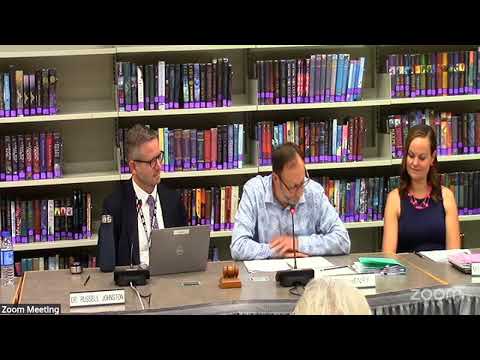
New Superintendent Russell Johnson outlines 100‑day plan focused on systems, outreach and school visits
Summary
At the May 19 Wallingford‑Swarthmore School Board meeting, newly hired Superintendent Russell Johnson described his first 100 days in the district, saying his plan prioritizes documentation of systems, interviews with stakeholders and direct observation in schools.
Russell Johnson, the Wallingford‑Swarthmore School District superintendent, told the school board on May 19 that his first 100 days will focus on documenting district systems, conducting interviews with stakeholders and making sustained in‑school observations.
"I shared with the board my 100 day plan, and it has 3 important components here," Johnson said, describing the three pillars as documentation, interviews and observation. He said the documentation work asks administrators to gather existing materials on assessment, curriculum and instruction, fiscal and asset management, human resources and professional development, leadership and governance, and student supports.
Why it matters: Johnson said the documentation is intended to move the district away from person‑dependent practices toward durable systems that will outlast any single staff member. He framed outreach and interviews as a second critical step to surface both strengths and gaps from a broad set of voices, and said observations are necessary to see schools in everyday operation.
Johnson said he had scheduled roughly 70 interviews during his initial weeks with community leaders, municipal officials, board members, district leadership, parent and student groups, bargaining‑unit representatives, bus drivers and faith leaders. He said meetings with principals and classroom visits at all five district schools were underway, and that he planned additional focused conversations in June.
He told the board he is intentionally prioritizing input from historically marginalized families. "We need to make sure that I'm listening to the people that most historically marginalized and whose voices are very important," Johnson said, and described plans to meet with residents at the ABC House and leaders connected to local housing developments.
Johnson identified four early analytic categories he expects to report on next month: strategic‑plan priorities, core district systems that must be built or shored up, new commitments the district has taken on (he cited the new electronic devices policy as non‑negotiable), and emerging challenges not captured in the strategic plan such as artificial intelligence.
On visibility and community ties, Johnson described attending concerts and school events to observe school culture, recounting a moment at a middle‑school concert that he said moved him: "I have never been so moved." He closed by promising to return with initial findings and recommended next steps at the board's June meeting.
Discussion and next steps: Board members thanked Johnson for his outreach and said they expected a written update at the next meeting that would begin translating his interviews and observations into concrete priorities. The superintendent said he will continue the interview schedule and present early findings to the board in June.
Ending: Johnson emphasized listening and building durable systems rather than quick personnel changes, and asked the board and community to help identify further stakeholders he should meet.