Get Full Government Meeting Transcripts, Videos, & Alerts Forever!
Get email alerts on the School Robotics topic
No spam. Unsubscribe anytime.
Scituate students showcase year‑round robotics program, seek space and volunteers
Summary
Members of Scituate High School’s Cyber Sailors presented the team’s season, outreach and needs to the School Committee, emphasizing prototyping, competitions, mentorship and a need for larger lab space as the program grows.
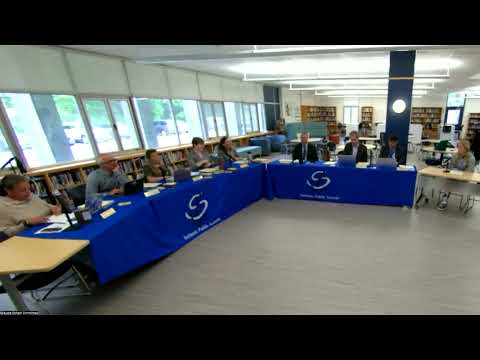
Members of the Scituate High School Cyber Sailors robotics team presented a summary of their season and a plea for space and volunteers at the May 19 School Committee meeting, describing year‑round design, fabrication and competition work and the program’s role as a STEM pipeline.
“Robotics is a year‑round event,” team members told the committee. Students described preseason work, prototyping cycles, tournament logistics and the community outreach that earns awards beyond match results.
Several students described learning both technical skills and teamwork. “I had never touched an Allen wrench in my life,” one student said, describing how mentors taught newcomers to use shop tools and software. The team credited volunteers and mentors — including mentor Ruben (Mr. Dumay) and staff advisors — for providing training and continuity.
The students said the team supports younger robotics programs (FIRST LEGO League) and holds outreach events. They also highlighted connections to classroom courses such as computer science and DECA marketing, noting that the club helps students apply classroom learning to real‑world projects.
The group asked the committee for help finding larger, dedicated lab space; students said the current lab is roughly 600 square feet, is fully equipped with tools and often forces subteams to work in hallways so fabrication noise and safety needs can be met. The students said more space and adult mentorship would let the program expand middle‑school outreach and sustain a growing membership.
Why it matters: The program offers hands‑on STEAM experience that students said translates into college acceptances, scholarships and practical skills. Committee members praised the team and discussed ways to support middle‑school recruitment and potential space solutions.
Discussion versus action: This was a presentation and request for support. The committee did not approve new facilities or funding at the meeting.
Ending: The committee encouraged continued outreach; team members said they will compete in one more scheduled competition and that community volunteers remain welcome.