Get Full Government Meeting Transcripts, Videos, & Alerts Forever!
Get email alerts on the State Education Budget topic
No spam. Unsubscribe anytime.
State lawmakers brief Scituate on education budget, urge funding formula changes
Summary
State Rep. Patrick Kearney and Sen. Patrick O'Connor updated the Scituate School Committee on the state budget, Student Opportunity Act gains, and proposals to change the foundation funding formula and increase special-education reimbursements amid federal funding uncertainty.
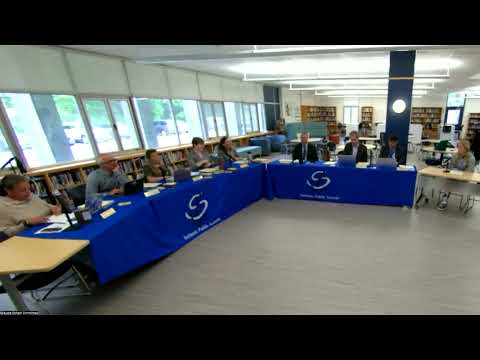
State Rep. Patrick Kearney and State Sen. Patrick O'Connor told the Scituate School Committee on May 19 that the Legislature’s budget work this month includes increased K–12 aid but that the state must overhaul its outdated school-funding formula to keep pace with health‑insurance and special‑education costs.
The two lawmakers briefed the committee on the House and Senate budget positions, Student Opportunity Act (SOA) funding already flowing to Scituate and proposals to increase circuit‑breaker reimbursements for special education and reopen the foundation budget review.
Kearney said the state is debating the fiscal 2026 budget after the governor’s proposal and the House and Senate have adopted different numbers. “We really need to change the funding formula,” Kearney said, adding that the current approach assigns a single minimum dollar figure to districts and “is just simply not keeping up with all of the challenges the school districts are facing right now.”
O'Connor said rising health‑insurance costs at the municipal level drove much of the pressure on local budgets and that the Legislature is attempting to provide relief. “Almost every single municipality [is in] a municipal funding crisis because of, in my opinion, rising cost of health insurance,” he said.
The lawmakers summarized several budget items they discussed with the committee: a statewide Chapter 70 increase (the presentation cited a $460 million increase in the Senate proposal), a per‑pupil increase the lawmakers said has moved from roughly $30 in earlier years toward $150 per pupil in current budget proposals, and continuing annual funding to phase in the Student Opportunity Act. They also said the House and Senate incorporated a supplemental response to a federal lapse in universal school meals funding; the presentation cited a $170 million supplemental allocation in which Scituate’s share was shown as approximately $1,021,000.
Both legislators said they are pursuing amendments to increase the special‑education “circuit breaker” reimbursement (an amendment discussed would raise the reimbursement in stages from a roughly 75% level toward higher percentages). Kearney and O'Connor described proposals that would reopen the foundation budget review more frequently than the current 10‑year cycle and consider taking some out‑of‑district special‑education costs onto the state’s balance sheet if reimbursements reached higher levels.
Committee members asked for specifics on out‑of‑district special‑education costs and how reimbursement changes would affect local budgeting. Kearney and O'Connor said the current system and rising tuition for certain placements are creating unpredictable, sometimes six‑figure swings in local budgets and that they want DESE (the Department of Elementary and Secondary Education) to scrutinize placements and provider services more closely.
Both legislators also warned that uncertainty at the federal level — and possible changes to Medicaid reimbursements — could force the state to scramble. “The hardest thing for us and for all of you is the uncertainty of it,” Kearney said, noting that some federal decisions could affect MassHealth reimbursements to the state and therefore the state budget.
Why it matters: Scituate’s share of state aid and any changes in special‑education reimbursement directly affect the district’s operating budget and planning. The committee heard concrete dollar figures presented by the lawmakers and was asked to treat pending federal budget moves as an additional risk to local planning.
Discussion versus action: This was an informational briefing; the committee did not take formal votes on budgetary matters. Committee members expressed support for the lawmakers’ goals and requested follow‑up details on how proposed changes would affect Scituate’s net school spending and special‑education costs.
Ending: The legislators encouraged continued local‑state communication as the budget process continues in late May, and committee members offered to serve as local contacts for the bills and initiatives discussed.