Get Full Government Meeting Transcripts, Videos, & Alerts Forever!
Get email alerts on the Building Department topic
No spam. Unsubscribe anytime.
Council weighs sending building permits to Summit County as debate over department performance and revenues intensifies
Summary
Councilors, the mayor and department heads debated a charter change that would eliminate the city building department and contract permit/plan-review functions to Summit County, with extensive discussion of permit revenue, rental-registration funding, service speed and recent staff turnover.
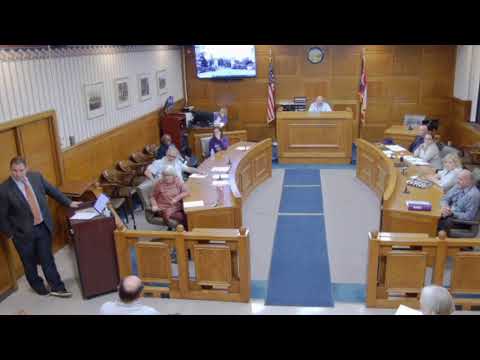
Barberton councilors spent a lengthy portion of the May 19 committee meetings debating whether the city should keep its building department or move permitting and plan review to Summit County.
Advocates for contracting said private contractors and neighboring county services often provide faster online permitting and virtual inspections; residents and some council members recounted long waits for local electrical or plumbing inspections. “Can you imagine coming in? I mean, so we're trying to do away with that and make that kind of stuff easier,” Public Service Director Derek Shreve said while listing digital plan submittal improvements the department is pursuing.
The mayor and the building department pushed back, citing revenue the department generates. The mayor said the department is “in the black” and that permit and plan-review revenue — including work Barberton performs for Norton — contributes substantially to the general fund. He warned that sending permitting to the county would “lose all permit revenue” and could leave Barberton responsible for property-maintenance wages currently covered in part with permit and rental-registration funds.
Councilors pressed on cost comparisons. The building department reported it brings in permit revenue (Norton $309,000 and Barberton $267,000 in one year as shown in department figures), while the city also pays for some contracted plan review and inspectors (a “professional services” line of about $111,000 the prior year). One councilor noted that big developments in neighboring communities can produce one-time revenue spikes that are not guaranteed in future years.
Council members and the mayor repeatedly raised two practical questions: how to replace revenue if permitting leaves the city, and whether property-maintenance enforcement would get underfunded if building-permit income moved to the county. “If you don't have people going to the county and getting permits or they're doing work and they're not getting inspections, who's monitoring that?” the mayor asked. Chief Polacek, the fire marshal, said another loss would be immediate on-scene support in emergencies: when fire or safety personnel need a rapid determination of structural safety, “they were there within 5 minutes,” he said of local building staff.
Several councilors also noted high turnover in the building department over the last two years and asked administration leaders to explain whether staffing instability contributed to permit delays. The administration said exit interviews are conducted and that retention ideas — more training and career steps — are under review. Director Shreve said staff additions and digital plan submissions have helped but acknowledged some public complaints about responsiveness.
No ordinance or charter amendment was adopted in committee. The council asked the administration for detailed, apples-to-apples comparisons showing current net revenue and net costs of continuing an in-house building department versus contracting permitting to Summit County, and for examples of how other nearby cities handle similar arrangements.