Get Full Government Meeting Transcripts, Videos, & Alerts Forever!
Get email alerts on the Water Conservation Great Salt Lake topic
No spam. Unsubscribe anytime.
Advisory council urges Centerville to adopt water-conservation tools to help Great Salt Lake
Summary
Consultants from SWCA and the Great Salt Lake Advisory Council briefed the Centerville City Council on water-conservation tools, state requirements and rebate programs, and urged municipalities to adopt ordinances and rate structures to reduce depletion to the lake.
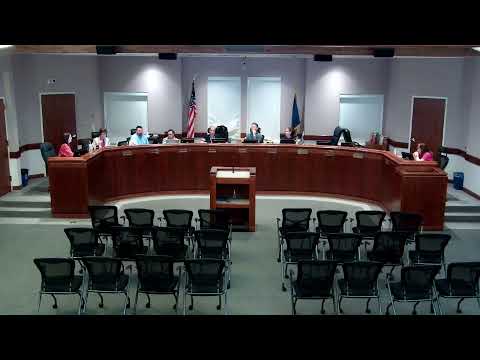
Erica Gaddis, senior water resources director at SWCA, and Tim Hawkes, chair of the Great Salt Lake Advisory Council, presented to the Centerville City Council on municipal water conservation and tools available to cities to help increase flows to the Great Salt Lake.
The presentation explained why municipal conservation matters to the lakeand to public health and local industries: outdoor irrigation is a primary source of water depletion, and reducing outdoor use or "shepherding" conserved water to the lake will reduce long-term decline and the risk of harmful dust storms from a drying lake bed.
Gaddis said state partners compiled a Great Salt Lake Water Conservation Toolbox with model ordinances, sample tiered rate structures and incentive programs that cities can customize, and described technical and funding supports available from the Division of Water Resources, Utah Waterways and the University of Utah S.J. Quinney College of Law. She told council members the state requires most counties and cities to add a water-use-and-preservation element to their general plan by Dec. 31, 2025, and that 2025 legislation (House Bill 274) requires municipal water suppliers to adopt a conservation-related tiered rate for the highest residential block by July 1, 2027.
The presenters gave specifics frequently asked by councils: the advisory councilwhich has a basinwide goal of about a 10% reduction in depletions (described in the presentation as roughly 250,000 acre-feet annually)is urging municipalities to adopt a mix of ordinances (stick), tiered rates (price signals) and incentives/rebates (carrots). Gaddis described residential rebates available through state programs: up to $100 for a WaterSense smart irrigation controller, up to $150 for replacing older toilets with WaterSense models, and a landscape incentive that can pay up to $3 per square foot for turf replacement where local ordinances qualify. She said roughly 67% of the Great Salt Lake Basin population currently lives in an area eligible for at least some of the landscape rebates.
Council members asked how Centerville could proceed. Gaddis said the toolbox includes low, moderate and high standards municipalities can mix-and-match, and that the S.J. Quinney College of Lawpart of the University of Utahoffers free technical assistance and ordinance review for cities that request it. Tim Hawkes emphasized municipal contribution alongside agriculture and industry: "If the only reason you step on a piece of grass is to mow it, that's really a luxury that we can't afford in a desert," he said, urging voluntary municipal action in parallel with agricultural programs and industrial measures.
Council members raised common concerns: whether agriculture or large water users (including data centers) should be the primary focus, and whether Centerville's largely built-out character limits ordinance impact. Presenters answered that conserved water must be dedicated and delivered to the lake to matter, and that built-out communities can still achieve measurable savings through irrigation timing, irrigation-technology upgrades and targeted turf replacement tied to incentives.
No formal action was taken. Staff and the presenters agreed to share the presentation and contact information for technical help, and council members signaled interest in further, more city-specific follow-up to evaluate qualifications for rebate programs and to review possible ordinance language.
Centerville council members will consider the materials and potential staff follow-up; presenters offered to provide a tailored checklist and a free audit via the University of Utah program to help the city identify specific, implementable steps.