Get Full Government Meeting Transcripts, Videos, & Alerts Forever!
Get email alerts on the Civic Center topic
No spam. Unsubscribe anytime.
Rock Springs council delays Civic Center closure after residents propose fixes and fundraising
Summary
The City Council amended Resolution 2025‑54 to change the Civic Center closure date from July 1, 2025, to July 1, 2027, after extensive public comment and citizen task‑force proposals to keep the facility open while addressing immediate safety items and pursuing a five‑year plan and fundraising options.
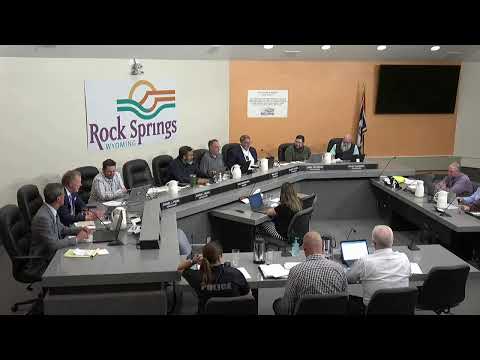
The Rock Springs City Council on May 20 approved an amendment to Resolution 2025‑54 changing the proposed closure of the Rock Springs Civic Center from July 1, 2025, to July 1, 2027, after several hours of public comment and presentations from a citizen task force offering alternative plans.
The amendment, moved by Councilman Zadeh and seconded by Councilman Petrie, passed by roll call vote. The amendment sets a two‑year window for the community and council to develop a detailed engineering assessment, a multi‑year repair plan and pursue public‑private funding alternatives before any closure or repurposing occurs.
Why it matters: speakers at the meeting said the Civic Center provides year‑round recreation, social services and cultural events and that incremental maintenance could keep the building open while longer‑term decisions are made. Task‑force members proposed an initial set of short‑term repairs to address mold, fire‑safety systems and the roof while commissioning a structural engineering study to determine exact long‑term costs.
Several public speakers urged the council to keep the facility open and offered voluntary help and fundraising. “We propose that you maintain your current operating budget of $11,587,450 and obligate $500,000 out of reserves with an additional $500,000 optional, if necessary, for the civic repairs,” Steven Allen, a resident and former long‑term care administrator who presented the task‑force plan, told the council. Allen said the approach would allow the Civic Center to remain open, address immediate safety needs, and buy time to produce a five‑year capital plan.
Task‑force members said a structural engineering assessment is needed. Council members cited a $45,000 estimate for a full structural analysis; Councilman Zadeh and others said the study is necessary because prior cost estimates ranged widely (testimony at the meeting cited ranges of $15 million to $30 million and commenters said those figures were not precise).
Council discussion also included reserve and budget context. Speakers said the city held about $13.5 million in reserves, that a three‑month operating reserve benchmark was roughly $9 million, and that the city’s annual operating budget figure for the cited departments was about $11,587,450. Several participants emphasized that state legislative appropriations, sales‑tax volatility, and other city priorities meant any reserve use should be temporary and replenished when revenues permit; speakers referenced Resolution 94‑15, Resolution 96‑91 and a 2012 reserve policy (mentioned in the meeting as an authorizing framework for temporary reserve use).
Community proposals presented to the council included:
• A citizen task force offering to help coordinate a five‑year maintenance and fundraising plan and to pursue private donations or a pass‑through nonprofit to accept major gifts.
• A suggested $500,000 initial draw from reserves (with a second $500,000 optional) to cover immediate, isolated repairs that could be done while the building remained open.
• A plan to commission a structural engineer to produce a firm cost estimate (the engineering study cost was discussed at approximately $45,000).
Speakers including Jack Weimer, Mike Scores and Paula Wanakotte of the Wyoming Community Foundation described potential private‑sector and philanthropic support; Wanakotte said bequests and major‑gift campaigns could supplement public funding and recommended giving a task force the opportunity to develop a campaign.
Council action: Councilman Zadeh moved the amendment to Resolution 2025‑54 to change the closure date to July 1, 2027; the motion was seconded by Councilman Petrie and passed on roll call. The amended resolution directs the process but does not itself appropriate the proposed reserve funds or authorize specific contracts; council members said they will pursue a structural assessment and form a working group to develop a five‑year plan and funding strategy.
Next steps identified in the meeting: commission a structural engineering analysis to determine specific repairs and costs; convene a committee or task force to produce a five‑year capital plan and a fundraising strategy; pursue outreach to potential private donors and foundations. Council members asked that the work proceed with a defined timeline so the two‑year window does not lapse without progress.
The council’s action followed multiple hours of public comment from residents, youth speakers and civic leaders who described the center’s community uses (swim lessons, rock wall, youth basketball and senior programs) and urged the council to pursue alternatives to immediate closure.