Get Full Government Meeting Transcripts, Videos, & Alerts Forever!
Get email alerts on the Transportation Impact Fees topic
No spam. Unsubscribe anytime.
Port Orchard council reviews three options to update transportation impact fees
Summary
City staff and consultant presented three alternatives for updating transportation impact fees that would fund road projects and influence development costs; council asked staff to send the proposal to the Transportation Committee, prepare a public hearing, and provide a comparison with neighboring jurisdictions before adoption.
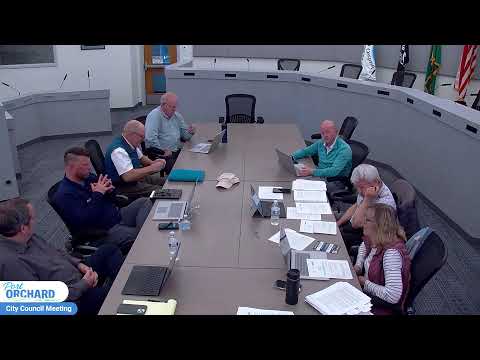
Port Orchard City Council members on May (study session) reviewed proposed updates to the city’s transportation impact fees and directed staff to take the proposal to the Transportation Committee and prepare materials for a public hearing.
The discussion matters because the impact-fee update sets how much new development pays toward road and intersection projects; changes affect whether projects are funded by developers, grants or the city’s general fund and change costs for builders and some businesses.
Nick, city staff presenting the briefing, said the city first adopted transportation impact fees in 2015, updated them in 2021–22 and contracted Transportation Solutions, Inc. (TSI) to prepare the latest review. “Transportation impact fees are assessed on new development to mitigate the impacts of that new development on the city's roads. It is not a fee that is paid by existing residents,” Nick said. He described three alternatives (A, B and C) based on different project lists; each additional project on the list increases the fee because impact-fee revenue is only eligible to fund projects on the approved list.
Andrew, a consultant with Transportation Solutions, Inc., told the council the update revises the city’s forecasting model, project list and costs and that the choices are discretionary: “it's essentially a mechanism for growth paying for growth's share of infrastructure.” He explained that the methodology ties expected project costs to forecasted peak PM trips and noted the city uses peak PM trips (typically defined as trips between 4 p.m. and 6 p.m.) and the Institute of Transportation Engineers’ trip-generation manual to estimate trip rates.
Staff said Alternative A is a modest increase intended to stay close to today’s fee while matching projects the city expects to fund soon and offering credits to developers who build listed projects. Alternative C would add most eligible projects and would raise the peak PM-trip rate “to just over $10,000 per peak PM trip,” a substantial increase over the current rate. Staff noted the single-family dwelling trip factor used in the calculations is a multiplier (0.95) applied to the peak-PM trip rate and that the 11th edition of the ITE manual reports slightly lower single-family trip generation than the 10th edition.
Council members pressed several implementation and equity questions. Chris Hammer, the city engineer, provided updated cost estimates in “today’s dollars,” and staff said the ordinance already includes an annual CPI adjustment but that construction cost escalation has sometimes exceeded CPI growth. Councilmembers asked about projects on the list funded by developer agreements or SEPA mitigation from neighboring jurisdictions; staff said Sinclair Ridge (a Bremerton-area development subject to SEPA mitigation) is contributing mitigation funds for a defined project list and that McCormick Communities is contractually responsible for specified intersection improvements and will receive an impact-fee credit for work done under their development agreement.
Council discussion also addressed these policy choices: whether to keep fees moderate to limit impacts on homebuilders and home buyers, whether to prefer a more aggressive fee to avoid shifting costs to existing residents, and whether to modify commercial rates or create zoning districts (for example, lower downtown commercial rates to encourage infill). Andrew noted some cities use variable rates by district to reflect different trip impacts and precedent exists for downtown or infill districts receiving lower commercial trip rates.
No formal vote was taken. Councilmembers expressed support for referring the options to the Transportation Committee for detailed review, holding a public hearing on the alternatives, and asking staff to provide a contemporaneous comparison with neighboring jurisdictions (Gig Harbor, Bremerton, Kitsap County and Poulsbo) including the dates those jurisdictions last updated their fees. Staff said the earliest the city could adopt a change is after the comprehensive-plan amendments and an updated Transportation Improvement Program (TIP) are adopted; those steps are scheduled in the council’s June adoption timeline.
Next steps set by staff: transmission of the alternatives to the Transportation Committee for prioritized review; preparation of a public-hearing package on the three alternatives; a comparative worksheet of nearby jurisdictions’ current impact-fee rates and adoption dates; and returning recommended next steps to council before any ordinance is introduced. No ordinance or fee change was adopted at the study session.