Get Full Government Meeting Transcripts, Videos, & Alerts Forever!
Get email alerts on the Monroe Avenue topic
No spam. Unsubscribe anytime.
Council hears mixed feedback on Monroe Avenue pilot striping; staff weighs 3-lane compromise and infrastructure study
Summary
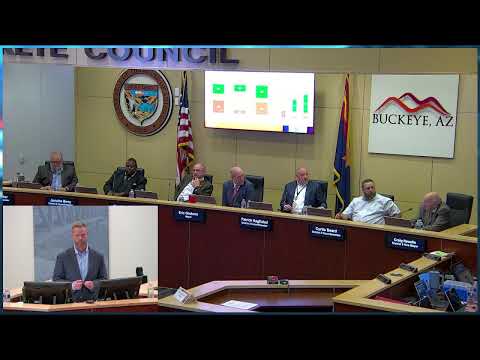
City staff briefed the City Council on May 20, 2025, about a Monroe Avenue demonstration project and three possible long-term street cross-sections for downtown: a four-lane section, a two-lane section and a three-lane modified section with a center turn lane.
City staff briefed the City Council on May 20, 2025, about a Monroe Avenue demonstration project and three possible long-term street cross-sections for downtown: a four-lane section, a two-lane section and a three-lane modified section with a center turn lane. Staff said they collected cell-phone travel-time data, traffic citations and crash data, and surveyed residents and downtown businesses to inform next steps.
Bridal Craig, the staff lead on the Downtown Specific Area Plan work, described the pilot phase and the next design and infrastructure steps. “This may look like a familiar topic, like the jelly of the month club. It's the gift that keeps on giving,” Craig said, summarizing the long-running downtown conversation. Craig said the demonstration striping and parklet/landscape exercises were intended to test ideas and gather feedback, not to serve as permanent construction.
The nut graf: Staff reported mixed results. Police and fire told staff the striping did not impede emergency response; crash counts and speeding citations reviewed by staff were lower in the post-striping period examined; travel times through Monroe increased modestly (nonpeak increase about 15 seconds; peak-hour increases around 40 seconds on average); and surveys produced no clear majority in favor of a single solution. Staff recommended a design concept review (DCR) and additional infrastructure planning before any permanent reconfiguration.
What staff presented and measured
Craig described five stages from pilot to full reconstruction: initial demonstration striping and parklets; landscape demonstration; design and utility coordination (the DCR); construction coordination and phasing; and final streetscape. The DCR, staff said, will identify below-grade constraints such as stormwater, water and sewer capacity and dry utilities and will inform construction phasing.
Public-safety and traffic data
Craig and staff provided police and fire feedback and traffic metrics. The police department aggregated a three‑year look-back at speeding citations and reported that citations did not increase after the restriping and that reported crashes for the comparable period decreased (staff cited 30 accidents in the earlier comparison period versus 18 in the later period). Priority‑1 emergency response times were not negatively affected, and the fire department reported no negative impact to emergency response.
Cell-phone travel-time data collected by staff over thousands of trips showed average increases through the downtown striping area of about 15 seconds during nonpeak hours and about 40 seconds during peak hours; staff noted a wider maximum increment of roughly 55 seconds when comparing some time slices.
Survey results and business feedback
Staff ran three surveys and a business outreach effort. An online survey collected about 859 responses; a paper survey at a community meeting yielded about 48 responses; and staff interviewed approximately 42 businesses that front Monroe between First and Ninth Streets. Craig said the online survey showed the four‑lane section received the largest single share of first-place votes but not a majority; the three‑lane option secured the largest share of combined first‑and‑second‑place preferences and, across the surveys and the business outreach, the three‑lane configuration was the most broadly acceptable compromise. Craig summarized one business finding: “About 2 to 1 ratio, 24 versus 12 preferred the 3 lane as their first choice over the 4 lane.”
Lessons learned, costs and timing
Craig noted operational lessons from the demonstration — driver confusion about new striping patterns, difficulty for some drivers making mid‑block left turns and mixed perceptions about parking and curb access. Staff also reported immediate pedestrian-safety investments: a median and a HAWK (high-intensity activated crosswalk) signal were installed at Ninth Street.
Staff estimated that obliterating the interim paint and restriping Monroe to implement a three‑lane configuration would cost in the range of $700,000 to $1,000,000. A full reconstruction tied to stormwater and utility upgrades would require a design and concept review, coordinate with CIP and could take multiple years under typical budgeting: staff discussed a 4‑to‑6‑year horizon for major reconstruction depending on funding and prioritization. Craig said the DCR would identify underground constraints and allow the city to “dig once” for stormwater and utility upgrades.
Council reaction and next steps
Council members weighed business concerns about visibility and customer access, the city’s desire for a walkable downtown and the tradeoffs between convenience for pass-through traffic and a destination-style downtown. Several council members said the three‑lane center-turn configuration is a plausible compromise; others emphasized listening to downtown businesses and cited concerns that narrowing the street too much could divert pass-through traffic to alternate routes and reduce incidental visits.
Craig recommended proceeding with the DCR and further stakeholder work before making a permanent decision. He summarized outreach to business and community groups and said staff will return to council with more detailed DCR findings and cost estimates; council did not take a formal vote at the workshop.
Why this matters
Monroe Avenue functions as Buckeye’s historic downtown corridor; the cross-section decision will affect pedestrian space, shade and placemaking opportunities, parking and driveway access for downtown businesses and the cost and timing of stormwater and utility upgrades. Staff framed the decision as one between preserving throughput and creating a pedestrian-oriented downtown that could attract restaurants, arts and destination retail.
Ending
Staff will proceed with a DCR and return with findings; council members asked staff to include estimated costs and a clear timeline for implementation when they return. Craig closed the presentation urging careful coordination: moving utilities and sidewalks together is more efficient than doing staged, repeated digs.