Get Full Government Meeting Transcripts, Videos, & Alerts Forever!
Get email alerts on the Public Health Tissue Donation topic
No spam. Unsubscribe anytime.
Washington County medical examiner's office honored for tissue donation work
Summary
The Washington County Medical Examiner's Office received the American Tissue Services Foundation's teardrop award at the Public Safety Committee meeting after county residents registered as donors at higher-than-average rates and the office facilitated donations that impacted hundreds of recipients.
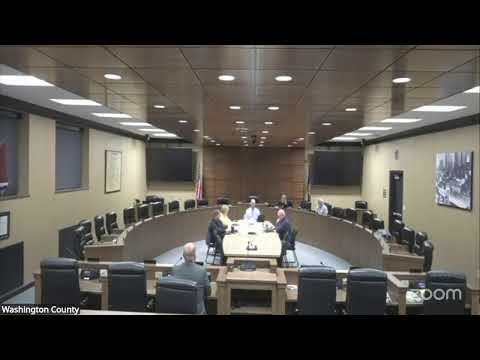
Washington County — The Washington County Medical Examiner's Office received a teardrop award from the American Tissue Services Foundation during the Public Safety Committee meeting in March 2025 in recognition of its tissue-donation work and family support.
Joyce Kratz of the American Tissue Services Foundation presented the award and said the teardrop symbolizes how a single donation creates ripples that extend far beyond the immediate moment. "The teardrop award is an award for, the recognition of tissue donation efforts by the Washington County Medical Examiner's Office," Kratz said. She told the committee that more than 675 individuals were impacted by tissue gifts coordinated through the county office and that tissue donations can remain viable for up to five years.
Kratz cited donor-registration statistics reported at the state level and said Washington County has one of the highest rates in Wisconsin: "The state of Wisconsin statistic as of now is 57 percent of people 15 years old or older have made their donor designation ... Washington County is one of the highest counties in the state, and you guys actually have over a 61%" registered-donor rate, she said. Kratz added that "one tissue donor can impact 75 or more lives," depending on the number and type of gifts that are usable for transplantation.
The committee applauded the office and thanked staff and leadership for their work supporting donor families. The recognition, Kratz said, honors both donors and the families who make decisions during "the darkest hour," and acknowledges the office's outreach and compassionate handling of those cases.
No committee action or policy change resulted from the presentation; the item was a formal recognition and informational update. Committee members asked clarifying questions about the geographic reach of donations, and Kratz said tissue distributed through the foundation serves surgical needs across the country and internationally.