Get Full Government Meeting Transcripts, Videos, & Alerts Forever!
Get email alerts on the Human Resources topic
No spam. Unsubscribe anytime.
Garfield Heights district outlines staffing priorities, retention steps after levy loss
Summary
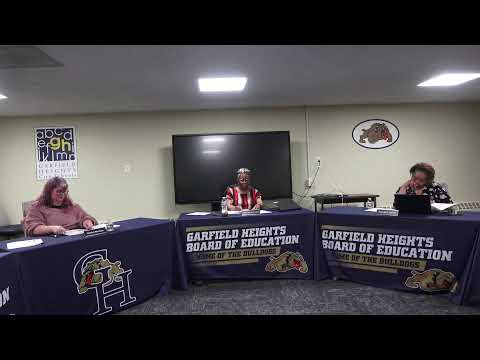
Employee services director Tasha Pettigrew presented a human resources update to the Garfield Heights City Schools Board of Education on May 19, outlining new evaluation tools, retention and wellness programs and a staffing priority plan after the recent levy loss.
Employee services director Tasha Pettigrew presented a human resources update to the Garfield Heights City Schools Board of Education on May 19, describing new evaluation tools, retention initiatives and immediate staffing priorities after the district’s recent levy defeat.
The presentation outlined programs the district has launched to retain employees, reduce absenteeism and “right‑size” staffing. "Everyone now has a performance evaluation tool to see how they're doing to continue to grow," Pettigrew said, describing a new supervisor evaluation plus a separate self‑evaluation for employees.
Why it matters: The district must match staff levels to falling enrollment and reduced revenue while trying to keep core services. Pettigrew and board members framed the measures as efforts to protect instruction and support employees as the administration trims positions the district will not replace.
Pettigrew described retention steps used during the 2024–25 school year: monthly department spotlights, a November service awards program for multi‑year employees, wellness and retirement planning events, biometric screenings offered through a vendor, and an attendance incentive program. She said the district moved substitute staffing from one agency to another during the year and showed month‑by‑month absence hours as evidence of modest improvement.
She gave a snapshot of vacancies and recent separations as of the meeting: 252 certified teachers, "26" classified workers and about 120 non‑union employees as reported in the presentation; eight open teacher positions (priority: intervention specialists, then core secondary subjects; encores/electives last), eight open non‑certified positions mainly in transportation and food service, four administrative openings (including a high school principal), 21 teacher/administrator resignations to date and 13 retirements. Pettigrew said the district would not replace every departing role and called the approach "priority staffing."
Board members pressed for detail about the HR survey Pettigrew referenced. Board member Miss Thomas asked whether the 52 survey responses were distributed "to teachers or to everyone," and Pettigrew said the survey was sent to all district employees. Pettigrew also said many new hires gave the district high marks during one‑on‑one new‑employee check‑ins.
Pettigrew described goals for 2025–26 that include retaining 95% of staff, creating an aspiring leaders program and succession plans for school secretaries and other key positions. She said the district plans an HR newsletter, improved website content and continued work with teaching and learning on professional development.
On absenteeism, Pettigrew presented monthly hours of absence as reported in district records and said May showed an improvement from the prior year; she attributed part of the trend to the change in the substitute vendor and to targeted incentives. She cautioned the board that there is "lots of work to do," but said current initiatives have produced incremental gains.
The presentation was informational; the board asked questions but did not adopt policy changes during the meeting. The HR report concluded with acknowledgments of retirees and a commitment to continue exit interviews with departing staff.
Ending: Pettigrew closed by listing next‑year HR goals and telling the board the department will share more data and proposals as staffing decisions move from planning to implementation.