Get Full Government Meeting Transcripts, Videos, & Alerts Forever!
Get email alerts on the Economic Development topic
No spam. Unsubscribe anytime.
Homewood committees send Samford-backed Creekside West plans to public hearings as developers outline $26 million tax-rebate request
Summary
Landmark Development and Samford representatives outlined a mixed-use Creekside West plan and a proposed 20-year tax-rebate framework capped at $26 million. Committees advanced rezoning and development-plan items to public hearings; separate finance review of incentive terms will follow.
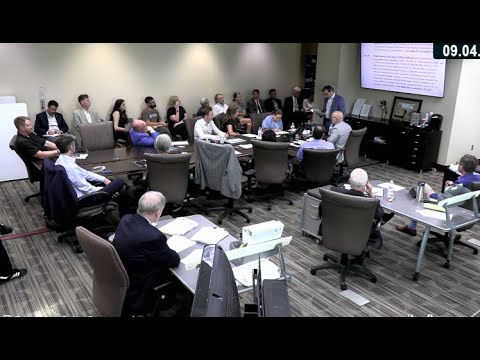
City planning and finance committees on May 19 advanced the rezoning and development-plan packages for the proposed Creekside West mixed-use district — a Samford University–anchored project presented by Landmark Development — to public hearings, while saying the city will consider any tax-incentive request in a separate finance review.
Developers told committees the project would be built in phases over several years and that they are seeking a financing structure that would capture a portion of new lodging and sales taxes for up to 20 years, capped at $26,000,000. Bob Dunn of Landmark Development and Lynette Bridal, of the Landmark team, described a project that includes mixed-use housing, retail and a hotel, and estimated roughly $104,000,000 in infrastructure costs associated with the site.
Why it matters: The development would change land use along Lakeshore Drive and, according to the developer’s consultants, generate substantial new tax revenue for the city and Homewood City Schools. Committees emphasized that environmental, traffic and school impacts — and the details of any incentive package — need to be addressed before final approvals.
Developers’ description and fiscal proposal Bob Dunn, representing Landmark Development, summarized the redevelopment concept and the team’s fiscal case. “We do view [the Community Investment Program] differently than traditional forms of tax incentive,” Dunn said, characterizing the proposal as an infrastructure-focused rebate tied to a multi-phase, mixed-use district rather than a single-project subsidy. Dunn said the developer hired AECOM and PFM to analyze fiscal impacts and that the firms produced similar results.
Lynette Bridal, identified as part of the Landmark Development team, described terms in the draft development agreement. Bridal said the agreement would allow the developer to capture Creekside West lodging tax revenues and sales tax increment for a period tied to a 20-year discounted value, while excluding any tax revenues that go to the school district. She said the team expects to shoulder the $104 million infrastructure estimate and to finance that cost in private capital markets.
“Our structure means there can only be fiscal gain to the city,” Dunn told committee members, adding the developer would bear the downside risk if forecasts fall short.
Changes since earlier filings Committee discussion included items the developer said were removed or scaled back after community input. Dunn said plans to develop Creekside East were pulled back after the city and developer discussed environmental concerns, including protections for Salamander habitat along Shades Creek. Dunn also said the developer is open to lowering the proposed hotel height if that helps advance a city consensus.
Committee action and next steps A motion from the planning and development committee sent four rezoning and development-plan items related to Creekside West and Creekside East to public hearings (scheduled for June) without recommendation, to allow full public testimony. Committee members said the incentives request will be considered separately in finance because the city must first know what development would be created before deciding whether to extend tax-sharing or rebate terms.
What remains unsettled Committee members and residents raised traffic, stormwater and school-capacity concerns. Developers said the housing component would include several hundred units (the developer described an approximate 430–435-unit residential component during committee discussion) and that the full project could be developed over roughly seven to ten years.
The committees did not approve incentives; members said a separate finance committee review will examine the proposed 20-year rebate capped at $26,000,000 and the claimed fiscal returns before any final city decision.
Public hearings on the rezoning and development-plan items are scheduled in June; the city’s finance committee will later receive the detailed incentive proposal for review.