Get Full Government Meeting Transcripts, Videos, & Alerts Forever!
Get email alerts on the Tax Abatement Development topic
No spam. Unsubscribe anytime.
Developer outlines tax-abatement plan tied to large mixed-use project; council to continue review
Summary
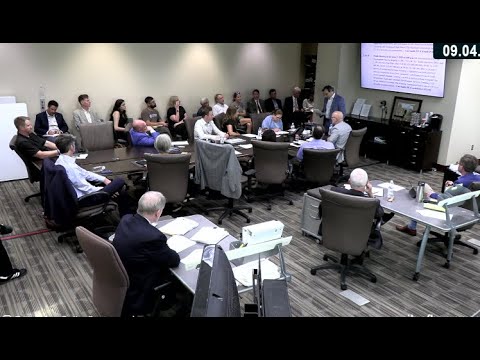
Bob Dunn, a representative of North Development, and Lynette Crandall of the Landmark Development Team updated the Homewood City Finance Committee on May 19 about a proposed community investment program tied to a large mixed‑use project anchored by Samford University.
Bob Dunn, a representative of North Development, and Lynette Crandall of the Landmark Development Team presented an update May 19 to the Homewood City Finance Committee on a proposed community investment program tied to a multi‑phase mixed‑use development near Samford University.
The developer team described the CIP as a tax‑rebate structure designed to pay for infrastructure tied to a multi‑phase district rather than to rebate revenues back to a single project. "There can only be fiscal gain to the city. There cannot be any fiscal decline to the city," Dunn said, summarizing the way the draft agreement allocates risk and revenue.
The developers said they have commissioned and reviewed fiscal‑impact work from AECOM and PFM and repeatedly validated projected tax growth tied to infill development. Crandall said the current infrastructure estimate is $104,000,000 and that the developer proposes a discounted, capped rebate valuation of $26,000,000 tied to a 20‑year capture of certain taxes. "That allows us to compare apples to apples at 26,000,000 tied to the current cost of a hundred and 4,000,000 of infrastructure today," Crandall said, describing the financing concept.
Developers stressed that the proposed rebate would exclude taxes flowing to Homewood City Schools, and that the private sector would front and underwrite the infrastructure costs. They also described non‑fiscal elements the project would seek to deliver—pedestrian and safety improvements such as a bridge over Lakeshore Drive, environmental stewardship measures for the watershed and civic assets intended to benefit neighborhoods as well as the university.
Committee members asked procedural and scope questions; the chair said zoning changes would be handled later by the Planning and Development Committee and asked that discussion about incentives remain separate for the current meeting. The item was carried forward for further discussion at the Planning and Development Committee and will return for more detailed review once the development agreement is complete.
No formal approval of the development agreement or incentives took place at the May 19 meeting. Committee members and staff noted the draft agreement still requires additional edits and finalization before any action by the full council.