Get Full Government Meeting Transcripts, Videos, & Alerts Forever!
Get email alerts on the Project Financing Grants topic
No spam. Unsubscribe anytime.
Orange County pushes multiple grant and loan applications for Harmon Lake project; May 30 Clean Water SRF deadline emphasized
Summary
County staff said they will submit a Clean Water State Revolving Fund application before May 30 to pursue grants and 0% loans, and outlined parallel state grant opportunities including the Water Infrastructure Improvement Act and a newly announced DEC water‑quality grant program.
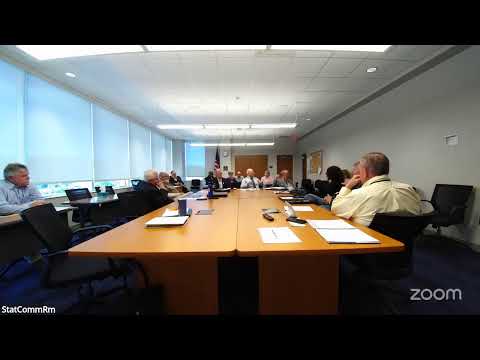
County staff and consultants told the Orange County Seward District No. 1 Advisory Committee on May 20 they are working to submit multiple competitive financing applications for the Harmon Lake wastewater project, with a Clean Water State Revolving Fund (CWSRF) package slated for submission before the program's annual deadline.
The applications matter because the projects could deliver substantial grant and low‑interest financing that would reduce borrowing costs and user rate impacts; staff said one federal funding opportunity in particular is in its final funded year and carries unique timing constraints.
Mary Beth B. Coney, partner at Delaware Engineering DPC, told the committee: “We will be submitting an application on May 30 or really before May 30, for financing through the Clean Water State Revolving Fund.” She explained the county submitted a draft for internal review to the law department and the office of the state controller and anticipated the Part 85 application would move through the county’s fiscal‑services agenda and then be packaged and submitted to the Office of the State Comptroller.
Coney described the urgency: the Bipartisan Infrastructure Law funding stream that supplements the CWSRF is in its final federal fiscal year and may not be extended. She summarized the potential benefit: “it can provide up to 50% grant, 50 interest loan for a 30 year term up to $25,000,000. So it would be $25,000,000 in credit, $25,000,000 in 0 interest financing against our…project.”
Committee members discussed the internal approvals the project needs. Coney said the county expects fiscal‑services review on June 5 and will need certified copies of a resolution before packaging the application for the State Comptroller; she said a county resolution will also be needed later to authorize submission of other state grant applications.
She also outlined two parallel state programs: the Water Infrastructure Improvement Act, included in the recently adopted state budget, which she said can provide up to $25,000,000 in grants (delivered in $5,000,000 annual increments and applicable at a 25% share of project costs); and a DEC Water Quality Improvement Project Program announced on May 19. For the DEC program Coney said the guidance was posted the day before the meeting, that a webinar is scheduled for June 9, that the DEC Q&A period runs into July 10 and that applications are due on July 31. She identified the DEC program category applicable to the county as “other wastewater treatment plant improvements” with a maximum award of $10,000,000.
Peter (committee member) and others described recent outreach to state legislators; Peter reported a senator had attempted to add project support to the state budget this cycle but the effort did not secure funds. Legislator Bonelli and others discussed timing for county resolution votes; staff said they will seek approvals in June and July committee/legislative cycles that align with program deadlines.
Staff explained the typical financing sequence: submit a Part 85 application and other grant applications, await iterative state reviews, obtain county resolutions authorizing submission and borrowing, and then, if awarded, structure a funding package that can include a mix of grants, 0% CWSRF borrowing and conventional market financing. Coney said short‑term construction financing can be structured to limit interest costs and that long‑term CWSRF financing can include 0% interest for subsidized portions of eligible projects.
No formal financing vote was taken at the meeting; staff said they would return to the relevant county committees with draft applications, certification documents and resolution language for scheduled June and July actions.