Get Full Government Meeting Transcripts, Videos, & Alerts Forever!
Get email alerts on the Agricultural District Inclusion topic
No spam. Unsubscribe anytime.
Committee reviews two applications to add land to Orange County Agricultural District No. 1
Summary
The Education and Economic Development Committee voted unanimously May 19 to review two property applications for inclusion in Agricultural District No. 1 and to set a public hearing; inclusion protects farm operations but does not automatically grant tax exemptions.
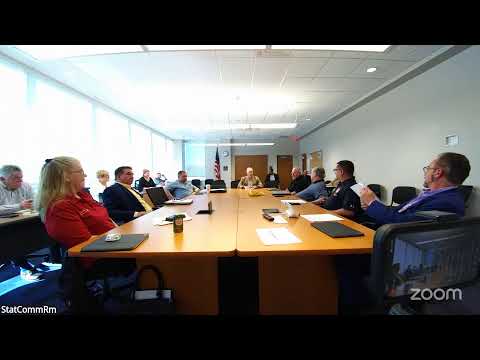
Orange County—s Education and Economic Development Committee voted unanimously May 19 to review two property applications seeking inclusion in Agricultural District No. 1 and to set a public hearing on the proposed additions.
The annual review process considers landowners— requests to join the county agricultural district, which provides protections for active farm operations. Alan Sorenson, commissioner of the planning department, introduced the item and staff recommended the two properties for inclusion after site visits.
Planning staff member Mister Skiewicz told the committee the office received two applications this year: one parcel in the Town of Newburgh on Lakeside Road of 13.2 acres that is currently boarding four horses and proposes to board 10 by year—s end; and a 36.2-acre property in the Town of Wawayanda used for agricultural planting and hemp research at 345 O'Hare Road in Milltown, New York, which is operating under a New York State Department of Agriculture license (no. 36-0210). "We conducted a site visit, agreed that these properties should be included in the ag land in ag district Number 1... we do not see any adverse impact to including these properties," Skiewicz said.
Committee members asked procedural and substantive questions during the discussion. A committee member clarified that inclusion in the agricultural district does not automatically confer a local farmland tax exemption: that exemption is a separate application and depends on the farm—s income and local jurisdictional rules. The chair emphasized the distinction, saying the public should understand that "by us voting on this to become part of the ag district does not necessarily mean that these particular landowners are going to get some sort of tax exemption." Staff confirmed that documentation and the required public-hearing step are included in the meeting packet.
After discussion, the committee took a voice vote to approve review of the applications and proceed with the public-hearing process; members responded "Aye," and the chair stated the motion passed unanimously.
Next steps include the formal public hearing required by the county process and any further submissions from the public or neighboring property owners; staff indicated hearing details and supporting materials are in the file and on the county website.
(Reporting note: remarks by Skiewicz and Sorenson occurred during the agenda item on the annual agricultural-district review; references to tax-exemption eligibility reflect explanations offered by staff and committee members during the same agenda discussion.)