Get Full Government Meeting Transcripts, Videos, & Alerts Forever!
Get email alerts on the Curriculum Coverage topic
No spam. Unsubscribe anytime.
Students and teachers urge board not to drop AP Human Geography as tenth-grade option
Summary
Dozens of students, alumni and teachers told the board they want AP Human Geography and other AP world-history options preserved; speakers said the course broadens access to AP classes and helps historically underserved students succeed.
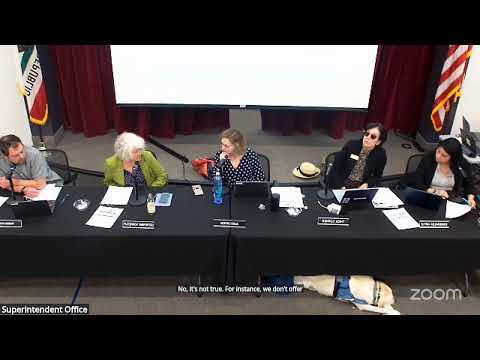
A sustained series of public comments at the Mountain View-Los Altos board meeting on May 19 urged trustees not to remove AP Human Geography (HGAP) or other AP options from the district's tenth-grade world studies pathway.
Teachers, students and alumni described the course as a popular, accessible AP option that helps first-time AP students build skills and confidence. "AP Human Geography...accomplishes just that," Los Altos social studies teacher Anna Pugh told the board, describing the class's support scaffolding for underrepresented students. Multiple students and former students said HGAP introduced them to critical modern topics such as population dynamics, migration and development and prepared them for later AP courses.
Teacher and department leaders presented data and testimony claiming HGAP increases AP participation among AVID, Latinx, special education and lower-income students and that those students often go on to take additional AP classes. Los Altos social studies teachers also said the course is validated by UC and other college-course approval processes.
Many speakers addressed recent reporting and rumors about the district considering removal of AP Human Geography or AP European History as world studies options. Superintendent Eric Volta and trustees clarified that prior board study sessions were informational and that no formal elimination decision had been made. Trustee Vadim (first name only in the public record) reminded reporters and staff that, "The only time a board can agree on something collectively is when the board has it on an agenda item and the board votes on it." (paraphrase of public comments recorded in the transcript.)
Students and community members described close personal impacts: "HGAP solidifies my love for understanding the community and the world around me," junior Leah Veliga said, and several students credited HGAP with changing their educational trajectories. Former students also said the class is often the first AP course for sophomores and gives them the skills (reading, writing, data analysis) to succeed later.
Several speakers asked the board to rely on teacher expertise and evidence when considering curriculum changes rather than on small, vocal parent groups. A long-serving teacher, Roger Kim, asked the board to "trust the educators of this district. Trust that we have done the evidence, done the research and looked at the evidence creating the best courses to prepare students for their futures."
Board members did not take immediate formal action on the curriculum in the meeting. Trustees asked staff to follow up, and several trustees urged clarity in public communications to avoid confusion about what, if anything, was under formal consideration.