Citizen Portal
Sign In

Phoenix will install 12 new leading pedestrian intervals this year, staff say

3424026 · May 21, 2025

Loading...

AI-Generated Content: All content on this page was generated by AI to highlight key points from the meeting. For complete details and context, we recommend watching the full video. so we can fix them.

Summary

Street Transportation staff told the Vision Zero committee that a Northern Arizona University study and local evaluations support leading pedestrian intervals (LPIs); 12 new intersections are planned for LPI installation by year‑end.

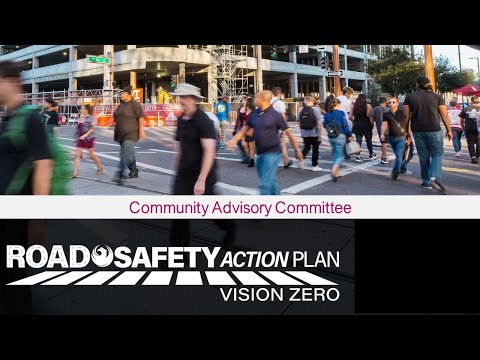
City traffic engineers told the Vision Zero Community Advisory Committee that leading pedestrian intervals (LPIs) reduce vehicle–pedestrian conflicts and that the department will install 12 additional LPIs by the end of the calendar year.

“Leading pedestrian interval is basically a real‑time strategy that allows the pedestrian…a head start or jump start, in front of the adjacent vehicle queues,” said Simon Ramos of the Street Transportation Department. Ramos summarized a Northern Arizona University study the city commissioned; he said the research found LPIs significantly reduced predicted conflicts and the likelihood of medium‑ and high‑severity conflicts at treated intersections.

Staff described the criteria used to evaluate locations for LPIs: five‑year crash history, pedestrian volumes, turn‑movement counts, intersection configuration, proximity to schools or transit stops, and vehicle level of service. Ramos said the department reduced its threshold for installation based on NAU guidance and will prioritize installing at least one LPI in each capital district; 12 locations were selected for installation in 2025.

Committee members asked whether LPI timing would be incorporated during new signal rebuilds and how LPIs affect vehicle level of service; staff said they are updating standard operating procedures and expect LPI calculations to be included in future signal timing guidelines. “We just finalized our SOP a couple of years ago with the best press and clearance interval. We’ll be able to change the rule…” Ramos said, adding that in many locations the cycle length can be adjusted without substantially disrupting vehicle coordination.

Members and public commenters raised concerns about emergency‑vehicle response and signal preemption. David, a public speaker, said emergency‑response concerns should not be used to prevent safety upgrades and argued for maximizing pedestrian head‑start times at busy light‑rail transfer intersections. Committee members asked staff for lists of intersections equipped for emergency preemption and for the list of fire and police vehicles that currently have preemption equipment; staff said some vehicles and signals have preemption but the capability is not yet citywide and the city is working toward broader deployment.

Staff said LPIs are an ongoing initiative; the 12 selected locations will be implemented this calendar year and staff will continue to identify additional candidate intersections. Simon Ramos asked members and the public to report intersections where pedestrians experience repeated conflicts so staff can evaluate them for potential LPI installation.