Get AI Briefings, Transcripts & Alerts on Local & National Government Meetings — Forever.
Panel: Faster, coordinated transmission planning needed in Montana; tribal engagement, workforce and coal-community impacts must be addressed
Summary
Panelists at a coalition event said Montana needs quicker, better‑coordinated transmission planning to unlock wind and solar resources, stressing early tribal and community engagement, workforce development and attention to coal‑community transitions and wildfire risk.
Speakers at a coalition transmission panel said Montana needs new transmission capacity and faster, more coordinated planning to avoid the 15‑to‑20‑year timelines that often delay projects, and that early tribal and community engagement, workforce training and attention to coal‑community impacts are essential.
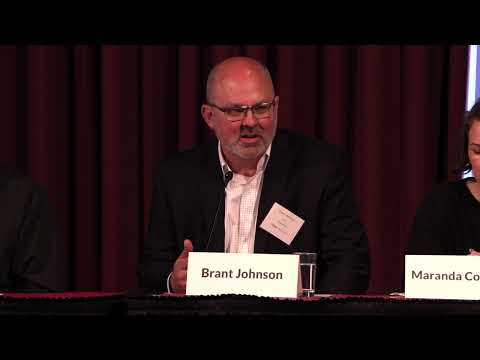
The issue matters because Montana has large wind and solar resources that could serve regional demand if transmission is expanded, panelists said. Brent Johnson, senior vice president for development at Grid United, described the Northern Plains Connector as a 3,000‑megawatt high‑voltage direct‑current project that would “connect the two grids” and allow bidirectional transfers that can reduce losses and better match diverse weather‑driven generation across regions.
Panelists focused first on planning and permitting. Miranda Compton, founder and president of LEPWAY, said the timeline problem is mostly procedural: “It is not we cannot snap our fingers and make transmission appear,” and stressed that cutting years from a project’s schedule requires “appropriate planning” and sustained engagement so that issues do not “mushroom and balloon out at the 5, 10, or 15 year mark.” Compton urged treating tribal nations “as governments, not just cultural artifacts,” and recommended early, sustained consultation to surface concerns before routes are finalized.
Brent Johnson described Grid United’s strategy to “de‑risk” corridors by doing upfront work with landowners, tribes and environmental agencies so proposed routes do not blindside local communities: “Nobody finds out about a route from anyone other than us,” he said, adding that careful environmental review is necessary to avoid legal gaps later. Johnson said the Department of Energy has taken a lead role producing an environmental impact statement for the North Plains Connector and that a well‑staffed DOE effort could shorten review timelines to about two years, trimming a project schedule toward a roughly five‑year path if combined with strong upfront work; he also cautioned that recent federal staffing reductions have reduced that capacity.
McKenna Sellers, executive director of the Montana Renewable Energy Association, described state policy activity aimed at easing transmission development. Sellers said the 2025 Montana Legislature considered proposals including a study on interstate compacts (S.J. 21) and a study of congestion and interconnection queues (S.J. 12), and that lawmakers and the governor have signaled interest in task forces or other studies. Sellers also cited Montana’s recent policy enabling subscription solar, the Montana Solar Shares Act, as an example of distributed resources that can be deployed more quickly than long transmission projects.
Panelists and audience members spent substantial time on workforce issues. Kyle Hintz, assistant business manager at IBEW Local 44, said early outreach and training are critical: apprenticeships and pre‑apprenticeship programs build a skilled crew that often travels for jobs but can return to Montana. He described how training and mentorship can turn school leavers into journeymen linemen and emphasized community benefits from those careers. Panelists noted partnerships with colleges such as Bismarck State College and Highlands College and described an existing pool of candidates and a referral pipeline into apprenticeships.
Panelists also addressed coal‑community transitions and historical context. Miranda Compton said tribes and coal communities have been sold successive energy economies in the past and that developers must acknowledge that history: “If you don't know the history of federal Indian law and U.S. policy, then that is the very first thing you should do before you call a tribe,” she said. She urged developers and policymakers to consider transferable jobs, long‑term family stability and what a project “is offering to that community” beyond a short‑term construction boost.
Audience questions raised additional topics including how planners develop transmission without an identified generator, grid bottlenecks such as the Colstrip area and wildfire risk. Brent Johnson and other panelists said planners can identify congestion, price differentials and likely resource locations to justify lines before specific generation is built. On wildfire risk, panelists urged operator maintenance, aging‑infrastructure upgrades, technology that isolates faults before a line contacts the ground, and industry plans to mitigate fire danger. Kyle Hintz noted training and construction practices aimed at reducing ignition risk.
Panelists repeatedly emphasized that transmission, distributed generation and workforce development are complementary. Sellers said distributed resources can “defer need” while larger transmission projects move through lengthy reviews, but that both are needed. The Northern Plains Connector was described as a technical “extension cord” for large transfers while distributed energy could build resilience closer to load centers.
No formal votes or motions were taken at the panel; the event was a discussion forum in which participants described ongoing projects, policy proposals and industry practices and answered audience questions.
Looking forward, panelists urged policymakers and developers to prioritize sustained planning, early tribal and community engagement, investments in local workforce pipelines and explicit strategies to address transitions in coal‑dependent places so benefits are durable for residents.