Get Full Government Meeting Transcripts, Videos, & Alerts Forever!
Get email alerts on the Youth Services topic
No spam. Unsubscribe anytime.
Youth Crisis Center asks Natrona County to continue funding, outlines Safe Passages residential pilot
Summary
The Youth Crisis Center told Natrona County commissioners it needs continued county support to keep its shelter and court-placement program operating, outlined a plan to create a local residential treatment model called “Safe Passages,” and described rising behavioral-health and violence challenges among area youth.
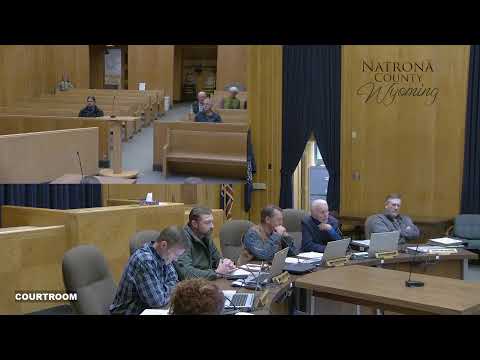
The Youth Crisis Center asked Natrona County commissioners on June 2 to continue county funding that it says helps keep at‑risk young people off the streets and out of jail, and described a proposed three‑year pilot to provide residential treatment locally.
"Respectfully and humbly we're asking for the hundred and 68,625 as part of our budget," said Dave Holchizer, executive director of the Youth Crisis Center, during a presentation to the board. Holchizer also said the county provided $50,000 last year to help operate the crisis shelter and asked the commission to consider the same level of support for the coming year.
Holchizer framed the request against a growing local need: he said many youth in the center's care have mental‑health and substance‑use diagnoses, prior failed placements and histories of abuse, and that the community lacks nearby residential treatment. "Over 3 quarters of these kids have a mental health diagnosis," he said, citing statewide congregate‑care survey data collected by the Wyoming Youth Services Association.
WHY IT MATTERS: Commissioners heard that the center's short‑term crisis shelter and a related group home provide emergency safety and court‑ordered placements, but that the county and region lack an in‑community residential treatment center (RTC). Holchizer said a proposed model called Safe Passages would combine housing provided by the Youth Crisis Center with clinical services delivered by community partners and schooling handled by the local school district. He said the pilot would require seed funding and estimated a three‑year proof‑of‑concept budget of about $587,000 per year.
Supporting details: Holchizer said the crisis shelter can house up to 10 youth at a time under normal rules and that the facility has 12 beds on the shelter unit; a separate group‑home wing houses up to five youth plus space to accept up to five additional court‑placed young people. He said the center is certified under Department of Family Services (DFS) staffing ratios and that staffing costs drive much of the price; he cited a daily housing figure of $663 per youth when county contributions are leveraged with other funding.
Holchizer gave the commissioners a projection tied to recent placements: he said 90 court‑ordered youth were counted earlier in the year and the center projected 108 court‑ordered placements by year end, representing roughly 1,868 days of housing (figures presented by Holchizer). He also warned that several federal grant cycles that help pay for runaway and homeless youth programs have not yet opened, leaving one source of revenue uncertain.
Commissioner comment and next steps: Commissioners asked clarifying questions about overlapping needs (mental‑health and substance‑use), data overlays, and program costs. Commissioner Coates asked if the survey data show overlapping diagnoses; Holchizer replied that many youths have both mental‑health and substance‑use issues and that family problems are often generational. Commissioner Laird asked about cost estimates, and Holchizer reiterated the daily cost and the requested county budget continuation. Several commissioners praised the center's work and urged Holchizer to stay in contact with county staff about state grant cycles and other funding opportunities.
ENDING: The board did not take a vote on the Youth Crisis Center's budget request during the presentation. Commissioners agreed to stay informed about the status of federal grant cycles and other funding opportunities and to follow up with the center and county staff as requested.