Get Full Government Meeting Transcripts, Videos, & Alerts Forever!
Get email alerts on the City Budget topic
No spam. Unsubscribe anytime.
Mesa council adopts tentative 2025-26 budget 6-1 after public calls to delay
Summary
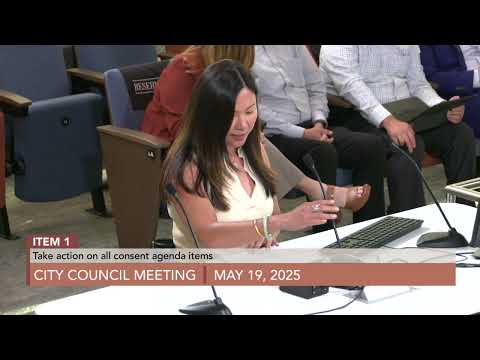
The Mesa City Council voted 6-1 on May 19 to adopt a tentative fiscal 2025-26 budget that sets spending caps for the coming year after public speakers urged the council to table the measure and seek deeper cuts to address projected deficits.
The Mesa City Council voted 6-1 on May 19 to adopt the city’s tentative fiscal 2025-26 budget, setting spending caps and moving the plan to the next stage of review.
The vote followed more than an hour of public comment in which residents urged the council to postpone adoption and ask staff for deeper spending cuts, citing rising debt and anticipated reductions in state and rental tax revenues.
Resident Kerry Davis told the council the budget’s full-time equivalent count rises to “approximately 4,800 employees,” an increase of 108 from the prior year, and said the city’s compensation spending rises by “almost $59,000,000,” from about $667,000,000 to $725,000,000. Resident Doreen Taylor, identifying herself as a constituent of District 2, urged council members to “please consider tabling the vote, sending it back for more consideration,” citing what she described as a roughly $40,000,000 reduction in revenues tied to sales-tax changes and shared-state revenue shifts.
Other speakers made related appeals. Antoinette Andruzzi asked the council to provide clearer detail on “miscellaneous” budget categories and to compare Mesa to demographically similar cities rather than larger urban centers. David Winstanley praised the staff’s five-year plan but warned that the forecast shows consecutive years with expenses higher than income and asked when the council would begin “hard discussions” to eliminate a structural deficit. Frankie Bauer urged steeper cuts to nonessential spending and warned that continuing the current trajectory would lead to additional bond or tax requests.
City Manager Christopher J. Brady defended the proposed spending and the five-year outlook, saying Mesa’s financial position is “solid” and pointing to recent credit-rating reviews that, in his words, “praise Mesa for its 5 year forecast.” Brady noted the city provides a broad set of services — including electric, gas, water and regional wastewater treatment — that complicate direct comparisons with other cities. He told the council staff set a conservative initial reduction goal of $9,000,000 and ultimately identified $11,000,000 in reductions to begin closing the gap.
Council debate focused on priorities and the pace of correction. Councilmember Adams (District 1) said he supports public-safety pay increases but expressed concern the budget does not accelerate closing the projected gap fast enough. Councilmember Duff, Councilmember Heredia and Vice Mayor Summers described the budget as protective of core services while noting more adjustments may be needed in future years. Councilmember Pillsbury said the council will have opportunities to check the forecast and make incremental changes after the tentative adoption.
Motion to adopt the tentative budget was made “by Ms. Billsbury, second by Mr. Heredia,” and passed 6-1 with Councilmember Adams voting no. The tentative budget sets the legal spending caps; staff and council will continue forecasting and may adjust program-level decisions before final adoption.
The budget debate included several quantified claims from public speakers and staff: the city manager said staff targeted an initial 2% reduction per department to achieve the $9,000,000 goal and the final proposal exceeded that target with $11,000,000 in reductions. Public commenters cited citywide figures they attributed to bond debt, a 78.8% debt-to-revenue figure, an estimated 44% rise in certain utility-related charges over five years, and an asserted $25,000,000 annual draw from reserves to support a rail asset; those figures were raised as concerns by speakers but not presented by staff as council-approved accounting entries during the meeting.
Councilmembers and staff encouraged continued public engagement and earlier community budget meetings next cycle so public feedback can inform staff proposals before presentation. The council’s tentative adoption allows staff to finalize staffing and program plans under the council-set caps before the final budget vote later this year.