Get Full Government Meeting Transcripts, Videos, & Alerts Forever!
Get email alerts on the Development Fees topic
No spam. Unsubscribe anytime.
Council considers ending residential CIAC payment plans; adds policy caveat for job-creating commercial projects
Summary
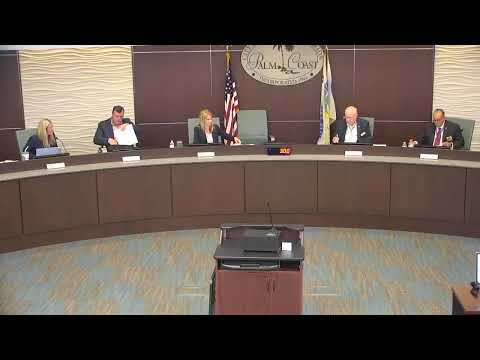
Council reviewed a staff proposal to end multi-year payment plans for residential CIAC capacity reservations and added a policy caveat to allow City Council to consider exceptions for commercial projects that demonstrably create jobs.
City staff presented a resolution revising the city's capacity-reservation policy for CIAC (connection/impact) payments tied to utility capacity reservations and impact fees. The change would remove the prior Option B payment plan that allowed residential subdivisions to pay CIAC over a multi-year schedule (20% upfront, remainder over months) and require full payment at submittal except in limited circumstances.
Chief of Staff Jason DeLaurenzo explained that the 2015 policy had previously permitted an Option B payment plan for residential subdivisions. "Most of those developments ended up building well before their time ran out and we collected them at building permit," he said, and told council the Office of Management had updated standard operating procedures consistent with the new impact-fee ordinance. DeLaurenzo said staff proposed removing Option B from standard practice and requiring payment up-front, with a new clause that would permit City Council to consider altered payment schedules for commercial projects that are determined by council to create jobs and promote economic development (subject to Florida Department of Environmental Protection approval of required permits to connect to the system).
Council members discussed the proposal and asked staff to define objective review criteria before granting exceptions. Councilman Gamborrow said the policy provision offers useful flexibility for economic development; Vice Mayor Pontieri and others asked staff to prepare a clearer metrics-based policy defining the types of commercial projects that would qualify for a payment-schedule exception. City staff agreed to return with more detailed policy language during an upcoming economic-development presentation scheduled for May 27.
On the record, Councilman Gamborrow moved to approve the resolution with the caveat that exceptions be governed by city council policy; Councilman Sullivan seconded. The transcript records the motion and discussion; staff said they would return to council with recommended policy parameters tied to economic-incentive threshold discussions. The explicit recorded vote for final adoption of the resolution was not shown in the transcript excerpt; council directed staff to prepare the policy language and associated review criteria.
Why it matters: shifting to upfront CIAC payments for most projects reduces long-term uncertainty in utility funding and places financial responsibility earlier in the process. The council also directed staff to build a clear, objective policy for when council will consider payment-schedule exceptions for commercial projects that provide measurable job creation or significant economic benefits.