Get Full Government Meeting Transcripts, Videos, & Alerts Forever!
Get email alerts on the Sewer District topic
No spam. Unsubscribe anytime.
Residents urge commissioners to intervene in Marshall County Regional Sewer District plans
Summary
Dozens of Marshall County property owners told commissioners the Marshall County Regional Sewer District is pushing a countywide sewer project they cannot afford and that the district’s board is unresponsive. Speakers asked the commissioners to investigate the board’s leadership and explore alternatives to a full sewer buildout.
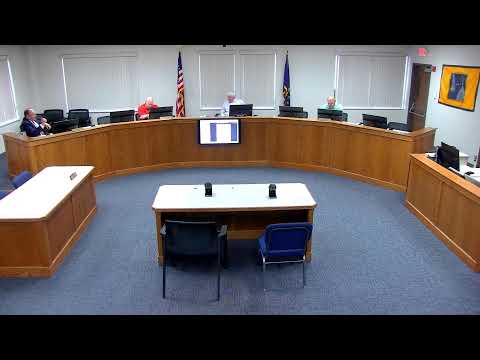
Dozens of residents warned the Marshall County Board of Commissioners on May 19 that the Marshall County Regional Sewer District is advancing a large sewer project they say many lakeshore homeowners cannot afford.
Residents told commissioners the district has spent preliminary funds while a major state grant application failed, leaving household estimates that could reach about $200–$220 per month if grants are not secured.
Why it matters: Speakers said the district’s current path threatens to push longtime and fixed‑income residents from their homes and asked county leaders to step in to ensure fiscal restraint, transparency and consideration of alternative septic solutions.
Residents and commissioners described a pattern of meetings and engineering work that they said has proceeded even after a grant application was not awarded. “This system is going to happen, and if you don't like it, file for an exemption,” attendees said was the response they received from Marshall County Regional Sewer District president Tom McFadden, a statement many speakers repeated during public comment.
Speakers gave detailed cost estimates and examples from contractors and engineers they consulted. One resident summarized the likely household costs: about $1,500–$2,000 to run power and install a grinder pump on some lots, $2,000 to tie the house into a line, and additional site work or lift pumps where lots are low relative to the new mains—bringing some homeowners’ total connection cost into the several‑thousand‑dollar range. Another cited the district’s preliminary engineering report from two years earlier that estimated a roughly $22 million build and noted the district sought about $16 million in grants (about 75% of that estimate) at that time; speakers said costs have increased since then.
Residents also criticized how the district has communicated and run meetings. They said the district relies heavily on its consultant, JPR, for information, has no independent website, and schedules some work or engineering without sufficient local input. A resident said a board member with technical experience, Chris Spear, expressed doubts about the grinder‑pump specifications but felt ignored.
County officials acknowledged the urgency of the public concerns. County Attorney Sean Cerisi said he would research the statutes and legal options for the commissioners’ authority over the regional sewer district and report back. Commissioners also discussed inviting district leadership to present at a future meeting so the county and the public can hear directly about financing, schedule and alternatives. No formal removal of any sewer board member or suspension of district activity was taken at the meeting.
Ending: Commissioners asked county staff and the county attorney to research legal options and promised further review at a future meeting; residents were encouraged to provide written materials and continue to attend district and commission meetings.