
Private company demonstrates spray‑injection pothole repair to House committee
Get AI-powered insights, summaries, and transcripts
Subscribe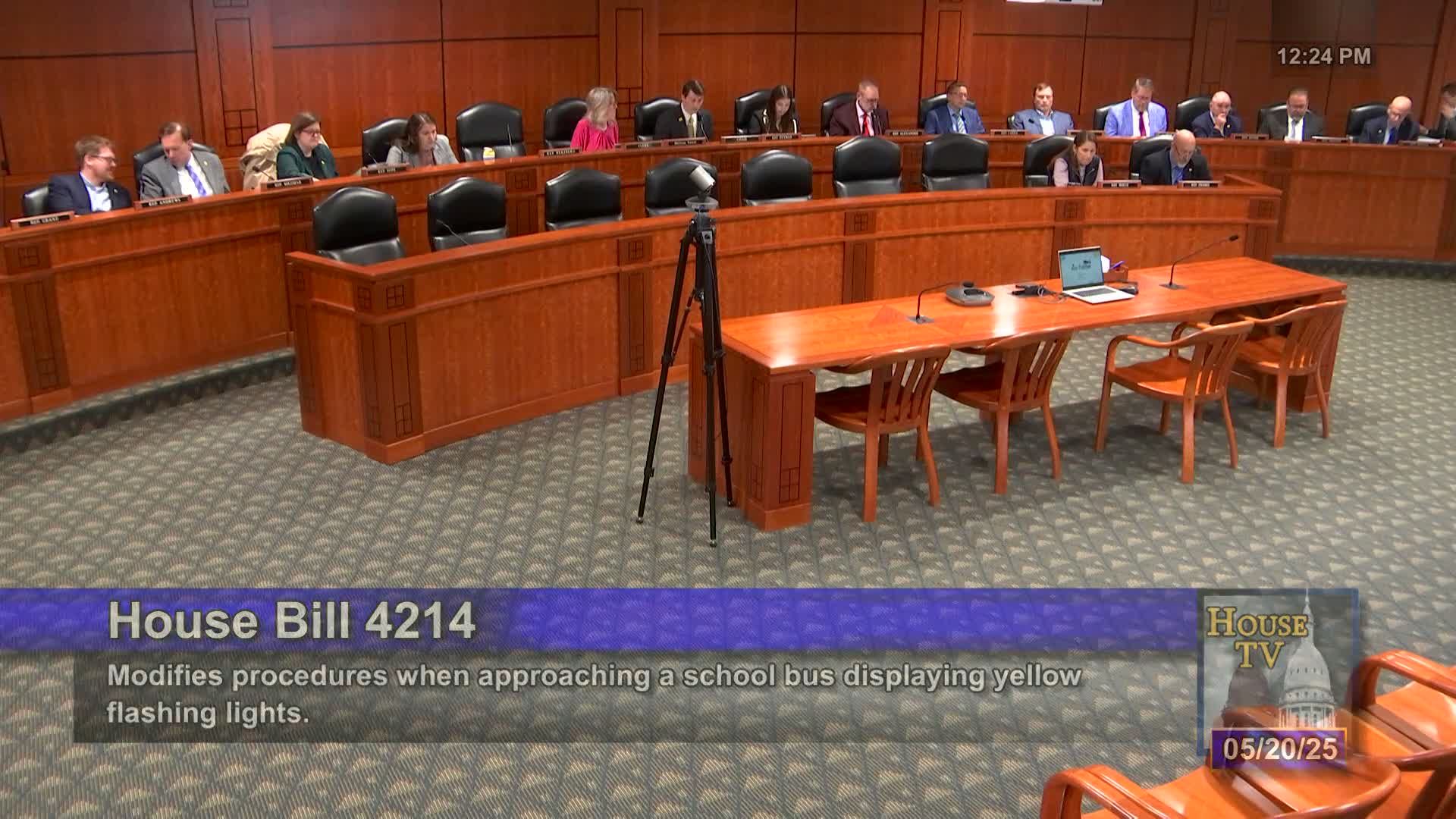
Summary
The House Transportation and Infrastructure Committee heard a presentation from Sebastian Bolling, owner of EcoPatcher, on spray‑injection pothole repair technology. Bolling described the repair process, cited a seven‑year example, gave cost and failure‑rate figures and answered members' questions about scalability and municipal adoption.
Sebastian Bolling, owner and president of EcoPatcher, demonstrated spray‑injection pothole repair before the House Transportation and Infrastructure Committee and described his company’s work for municipal and private clients, including a current contract with the City of Kalamazoo.
Bolling told the committee his process begins with cleaning debris from the pothole, applying a tack coat to block moisture, filling with cleaned aggregate mixed with emulsion, topping with another tack coat and a light aggregate so the patch won’t stick to tires. He said the company sweeps and tamps every repair and that completed repairs are typically ready for traffic within eight to 12 minutes.
Why it matters: committee members noted potholes are a recurring maintenance cost for municipalities and a nuisance and expense for motorists. Bolling said traditional methods often require repeated repairs and that his company’s approach reduces repeat visits and overall lifecycle costs.
Details provided in testimony and Q&A included a Kalamazoo contract price cited by Bolling of about $9 per square foot, a company self‑audit that showed a roughly 4% failure rate in the first six months for repairs the company tracked, and an equipment cost range Bolling gave of roughly $100,000 to $200,000 per vehicle. Bolling said EcoPatcher provides both direct service and equipment leasing/training arrangements for large property owners or municipalities.
Committee members asked about limits and scalability. Bolling said rain can complicate work but that his equipment includes an auxiliary engine that can blow water out of potholes; he also said repairs are feasible at highway speeds and for heavy vehicles because tamping and proper sealing reduce moisture intrusion. He told members two EcoPatcher units could cover a medium‑sized city if dispatched strategically, and he described barriers to wider municipal adoption including procurement practices, equipment cost and local staffing or union rules.
Bolling repeatedly framed the approach as a private‑sector response to a recurring infrastructure problem and said the product and basic mix (AE90 or RS rapid set emulsion with washed limestone aggregate) are not proprietary. The committee thanked Bolling for the demonstration and said members would follow up with him on procurement and pilot options.