
Highfields CEO urges state to preserve family‑preservation services, warns of funding threats
Get AI-powered insights, summaries, and transcripts
Subscribe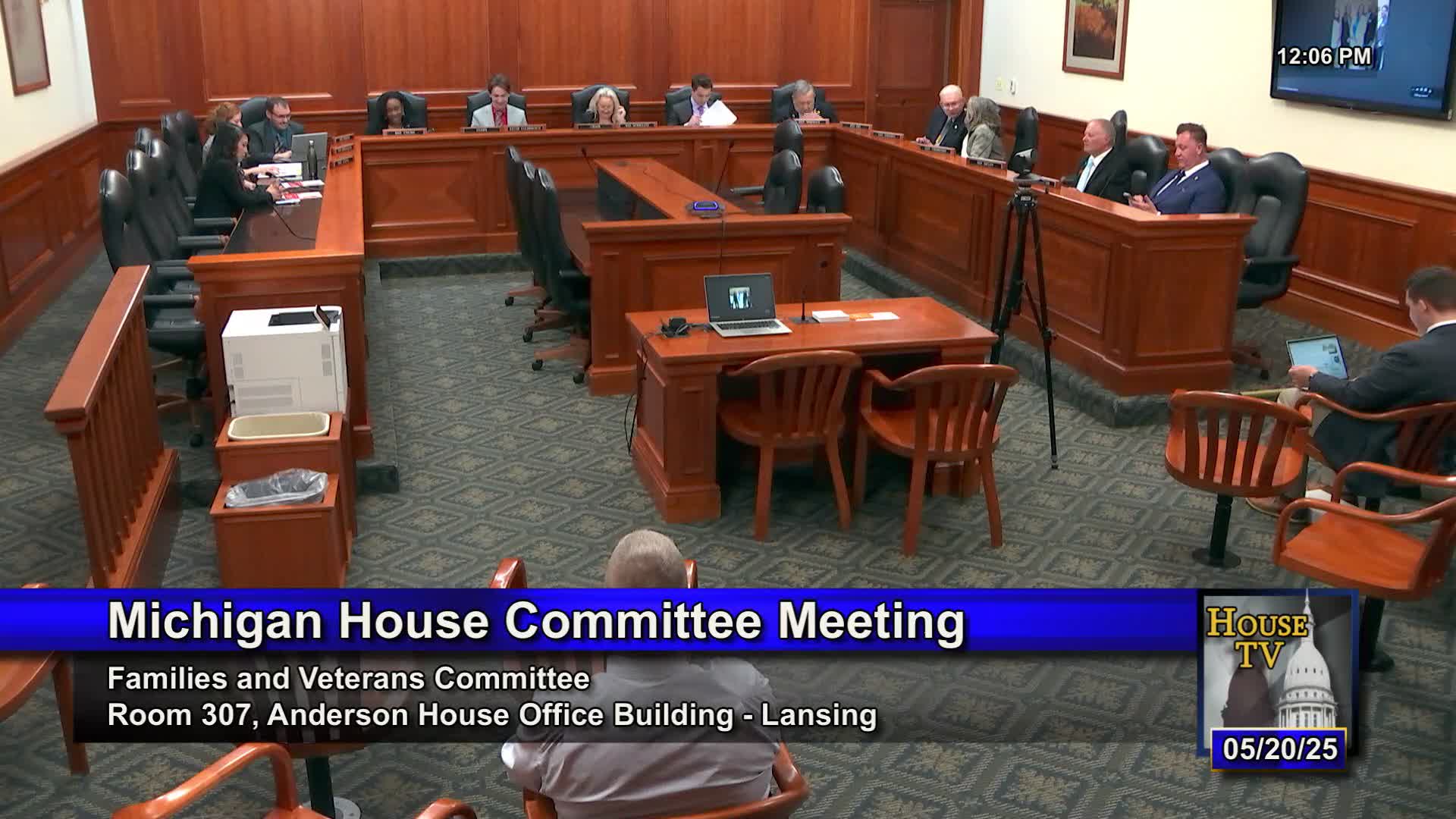
Summary
Brian Filson, CEO of Highfields, told the House Families and Veterans Committee that family‑preservation and in‑home services reduce foster placements, but the provider network faces funding and capacity threats including potential federal and Medicaid changes.
Brian Filson, CEO of Highfields, told the Michigan House Families and Veterans Committee that preserving family‑preservation services and the provider network is essential to keeping children safely at home and avoiding more costly out‑of‑home placements.
Filson, who leads Highfields and said he will begin his 20th year there after two decades in juvenile justice, described the agency’s three primary divisions — residential, educational and community services — and urged continued state support for provider reimbursement and cost‑of‑living increases.
Filson said Highfields now serves 10 counties and that its work focuses on stabilizing families, strengthening parenting skills and empowering households so children can remain in their homes. “We stabilize, we strengthen, and then we go on to empower them,” Filson said. He added that the residential program is now the smallest of the agency’s offerings and that most work occurs in community services and education programs.
Why it matters: Filson told lawmakers that preventive, in‑home and community‑based services are more effective and less expensive than removing children from their homes and placing them in foster care or residential treatment. He cited a variety of risk factors — poverty, parental incarceration, substance use and pandemic aftereffects — and argued that bolstering prevention reduces long‑term juvenile justice and child‑welfare costs.
Details and examples: Filson described Highfields’ after‑school operations — five sites in Jackson County, four in Ingham and one in Eaton County — that serve about 30 children per day at each location and provide homework help, dinner and transportation. He said Highfields’ residential program typically serves youth aged roughly 13–17 and commonly runs about six months, with some stays extending to eight or nine months depending on needs.
Filson gave case examples to illustrate outcomes. He described a young single father who was awarded custody of an infant after the child’s mother died; Highfields staff provided car seats, beds and parenting support, and Filson said the child was doing “amazingly well” two years later. He also recounted the story of a boy who first joined Highfields’ after‑school program while living in a homeless shelter; Filson said the student later spoke at a fundraising breakfast about the program’s positive effect.
Capacity and system issues: Filson told the committee the state has recently faced a shortage of placement capacity, producing wait lists for residential care. He said Highfields had about 10 youth on its waiting list at the time of his testimony and that some counties, because of long waits, have sent youth out of state. Filson said county and state systems must address capacity and rates to keep providers viable.
Committee exchange and follow‑up: Committee members asked about addiction, LGBTQ‑identified youth, gender‑affirming care, and whether Highfields’ residential sites were co‑ed; Filson said the residential facility he discussed is not co‑ed and described efforts to meet the needs of youth who identify as LGBTQI. Representative Thompson pressed on whether youths’ sentences sometimes await placement in a residential program; Filson said the state has reduced wait lists but that placement demand can still exceed supply. Representative Johnson asked about faith‑based partnerships; Filson said churches and service clubs provide material support and volunteer effort.
No formal committee vote or directive followed the testimony. Filson invited committee members to visit Highfields’ renovated administrative and residential hub; he said the facility renovation was funded through a state infrastructure grant and a dedication is planned in July. Chair Schmaltz and members expressed interest in arranging a visit.
Discussion versus decision: Filson’s presentation and the committee Q&A were discussion and informational; the committee did not take formal action on funding or policy during the hearing.
Ending: Lawmakers thanked Filson for the briefing and noted the state’s ongoing juvenile justice reforms and rate‑setting work that Filson cited as important to maintaining the provider network.