Get Full Government Meeting Transcripts, Videos, & Alerts Forever!
Get email alerts on the Land Use Infrastructure topic
No spam. Unsubscribe anytime.
Walker County begins rewrite of subdivision pavement rules; commissioners weigh concrete versus asphalt and testing requirements
Summary
In a lengthy workshop, Walker County commissioners and staff debated whether to require concrete for county-accepted roads, raise minimum stabilized subgrade depths, extend warranty/bond periods, and add testing (including GPRS) and geotechnical requirements; staff will return with concrete and asphalt options for a future vote, possibly June 16.
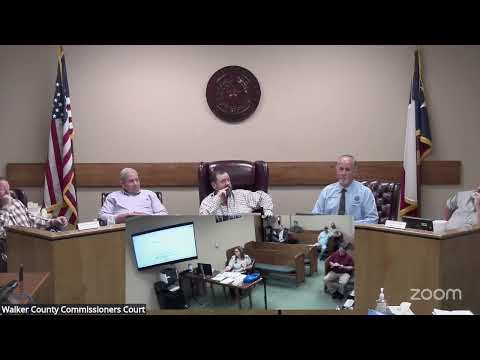
Walker County commissioners on May 19 held an extended workshop on proposed updates to subdivision road and pavement standards, including whether to favor concrete over asphalt for roads the county will accept for maintenance, how deep to require stabilized subgrades, and what testing and bonding terms to require before acceptance.
Andy, a county planner presenting the agenda, said the county’s subdivision regulations currently offer multiple pavement cross-sections — asphalt with shoulders, asphalt with curb-and-gutter, and concrete with open ditch — and the court asked for further discussion on minimum pavement sections and associated testing standards.
Stephanie, the county engineer, told commissioners that concrete generally has a longer service life (often cited as 30–50 years for major rehabilitation intervals) while asphalt is cheaper to install and easier to repair quickly. She recommended broader subsurface information — including ground-penetrating radar (GPRS) or paving scans in addition to point borings — because a single geotechnical boring samples only one location while a scan shows cross-sectional thickness, density and moisture over an entire pavement area.
Commissioners debated tradeoffs for several hours: some favored retaining asphalt as an option for lower-density or large-acreage subdivisions; others argued that limiting county acceptance to roads built to concrete standards would reduce long-term maintenance costs for taxpayers. Several commissioners and staff urged stronger language requiring design to follow geotechnical recommendations and discussed increasing the minimum stabilized subgrade from 6 inches to 8 inches to improve structural integrity.
Legal and policy points: a county attorney (addressing legal risks) advised caution about embedding a binding policy in subdivision regulations that could be changed by future courts; he recommended a clear county policy or guidance that the court could adjust rather than a hard-coded regulatory ban on asphalt.
Testing and warranty: commissioners asked staff to examine lengthening the warranty/bond period currently set at one year to two years and to clarify inspection and on-site testing requirements (lab testing and construction monitoring). Staff confirmed the regulations already allow the county to require additional testing at the county’s discretion.
Decision and next steps: commissioners did not adopt final rule changes at the meeting. They directed staff to return with two concrete proposals (option A and option B) that outline tradeoffs: one that retains an asphalt standard for some subdivisions and one that favors concrete for roads the county will accept by policy. Staff were also asked to evaluate increasing minimum stabilized depths, consider a two-year warranty/bond period, spell out on-site testing requirements (including GPRS scans and geotechnical borings), and return with recommended language for a future action, targeting June 16 for a vote if posting deadlines allow.