Get Full Government Meeting Transcripts, Videos, & Alerts Forever!
Get email alerts on the Reentry Services topic
No spam. Unsubscribe anytime.
Boston Office of Returning Citizens details staffing gains, housing efforts and data plans at budget hearing
Summary
City officials described a fully staffed Office of Returning Citizens, new case management tools, partnerships with nonprofits and a small pool of housing vouchers during a May 19 committee hearing on the FY26 human services budget.
Boston City Council Committee on Ways and Means Chair Brian Worrell heard a presentation May 19 on the Office of Returning Citizens’ FY26 budget and programming, where officials outlined staffing increases, new case-management technology, grant awards and housing placements aimed at connecting people returning from incarceration with housing and jobs.
The presentation matters because housing and employment are recurring barriers for people exiting custody, and the city described both pipeline-building efforts with employers and a limited set of housing resources tied to the Boston Housing Authority and local grant funding.
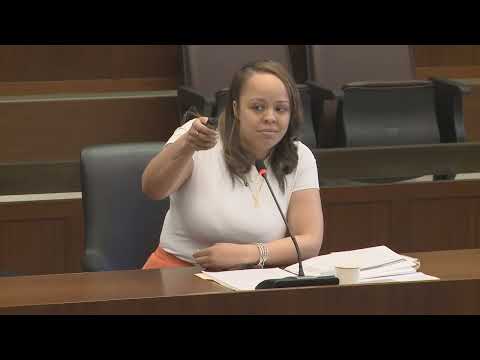
Jose Maso, chief of human services for the city of Boston, introduced the Office of Returning Citizens (ORC) and said the office is part of the Human Services Cabinet that coordinates services across multiple departments. Ashley Montgomery, executive director of the ORC, said the office is now “fully staffed,” and highlighted three operational changes: hiring a director of case management, adding a community outreach specialist, and deploying a new case management system intended to speed intake and track outcomes.
Montgomery said the office averages about 20 new clients per week and has reorganized intake so a person can meet a case manager the same day they register. She said the new senior housing specialist coordinates with property owners and the Boston Housing Authority (BHA) and that "we received 50 vouchers and have already made 41 referrals resulting in 28 successful housing placements," a tally she offered during questioning.
On grantmaking, Montgomery said the ORC launched a Returning Citizen Housing Support Grant and a Returning Citizen Support Grant; she described awards that the transcript records as “$300,000 in funding for the fiscal year to 7 organizations” for housing work, and a separate $607,000 award to 38 community-based organizations for reentry services. (Transcript phrasing included an inconsistency about per‑award caps; that discrepancy is noted in clarifying_details.)
Councilors pressed the office on specific gaps and performance measures. Councilor Flynn asked about on-site mental‑health services; Montgomery said the ORC does not provide on‑site licensed mental‑health clinics but “we do work directly with, like, Crossroads and Gavin Foundation, other organizations within our community to provide mental health services.” Councilors also asked whether the office can engage people before release; Montgomery said the office historically waited for people to reach out but has hired a director of case management to “build the pipeline behind the wall” so staff can connect earlier with people still in custody.
Councilors raised policy questions that the ORC cannot unilaterally change, including limitations imposed by criminal records on housing and employment. Montgomery noted that Massachusetts’ “ban the box” rules have helped but that employers still decline applicants with certain offenses or open cases. Several councilors urged continued outreach to large employers and to use the city’s purchasing and hiring leverage to expand second‑chance opportunities.
Montgomery said the ORC is commissioning a needs assessment with Justice System Partners to identify service gaps and to guide FY26 planning. She told the committee the office has launched an advisory group to coordinate grantees and community partners and has begun regular site visits to monitor implementation.
The hearing included questions about program scale and tracking. Montgomery described caseloads of roughly 100+ clients per case manager and said the office does not use a single, uniform success metric because clients’ needs differ, but staff track placements, referrals and “success stories” internally. Councilors urged clearer outcome reporting and stronger linkages between reentry services, housing resources and workforce pipelines.
City councilors who participated indicated support for the office’s expanded staffing and asked for continued improvements in data, earlier engagement inside facilities and additional housing vouchers. No formal motions or votes on the ORC budget were recorded during the hearing; the session was a budget review and Q&A before further committee consideration.