
Courts ask Legislature to allow problem‑solving courts to enforce medical‑cannabis abstention in limited cases; patients and industry resist
Get AI-powered insights, summaries, and transcripts
Subscribe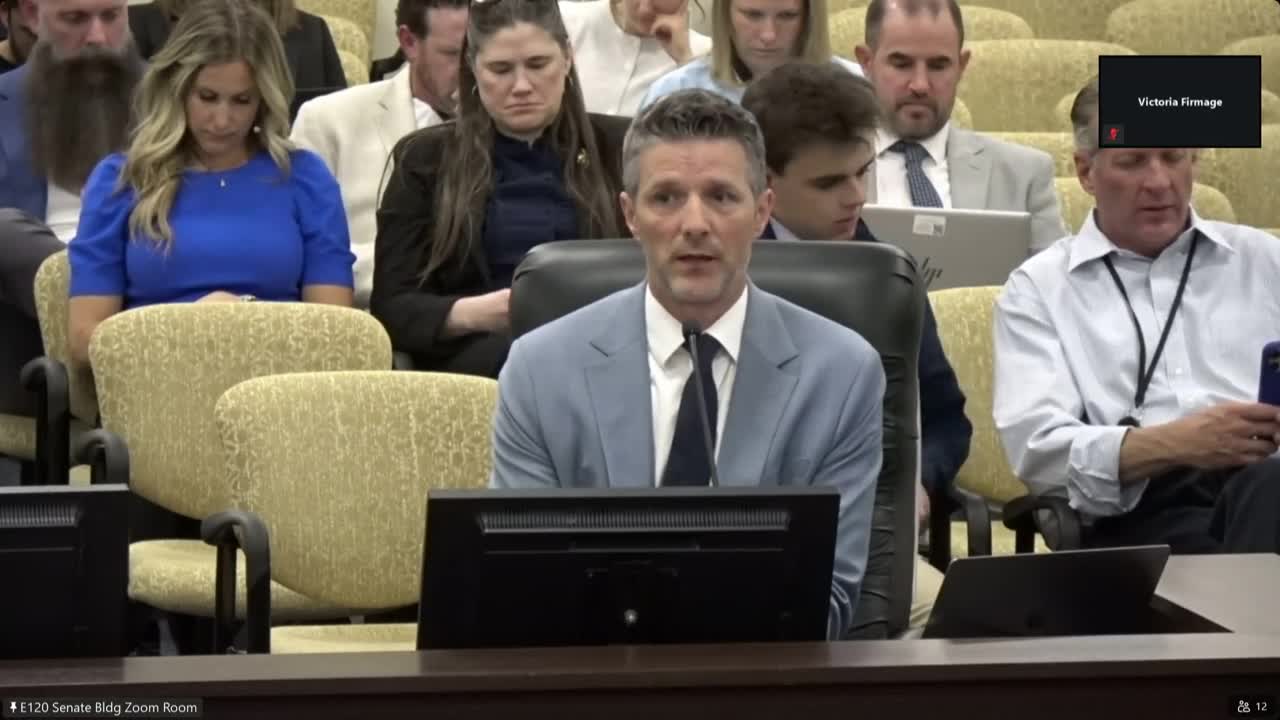
Summary
The Administrative Office of the Courts asked a legislative working group May 20 to authorize judges in problem‑solving courts to enforce a prohibition on medical‑cannabis use for program participants in limited cases after consultation with the recommending medical provider.
An aide to Utah courts told the Medical Cannabis Governing Structure Working Group May 20 that judges in problem‑solving courts sometimes cannot enforce clinical treatment plans because statute bars requiring abstinence from medical cannabis, and the Administrative Office of the Courts asked legislators to consider targeted statutory change for those courts.
The proposal matters because problem‑solving courts (drug courts, treatment courts and mental‑health calendars) are multidisciplinary teams focused on recovery; the courts say current law limits their ability to require abstention from medical cannabis even when treatment professionals find it a barrier to a participant’s recovery plan.
"If you look at 78 a 2 2 31 ... the statute ... basically says that a court judge has to treat the use of medical cannabis the same as any other lawfully prescribed controlled substance," Michael Drexel, assistant state court administrator, told the working group. He said the same statute also contains a provision barring a court from requiring abstinence: "subsection 3 says, notwithstanding all of that, [a] court is prohibited from requiring a person to abstain from the use of medical cannabis, as long as the person's use ... is compliant with the statutes."
Drexel said the practical effect is that when treatment providers in a problem‑solving court determine medical cannabis is a barrier to recovery, judges lack a clear tool to enforce medical‑team decisions that would apply to other lawfully prescribed controlled substances. He asked the working group to consider statutory language that would allow courts, after consultation with the recommending medical provider and notice to the participant, to enforce a prohibition on use for a participant in the problem‑solving court program; the proposal would include data collection on the number of participants affected.
Diverse responses at the meeting
The proposal on the agenda was the result of policy advisory board consideration and came with a divided vote in the Medical Cannabis Policy Advisory Board. Several board members and patient representatives spoke against the court proposal.
"I was one of the members of the policy advisory board that voted against this proposal," JD Lauritzen, WholesomeCo legal compliance lead and pharmacy representative on the advisory board, said during public comment. Lauritzen said he did not see data showing how often courts encounter this problem and warned the change could effectively deny patients a legal treatment option while they pursue court‑imposed rehabilitation.
Patient representative Nanette Bethizny said she voted against the proposal as well. "This is a last resort for patients," she said. "They've had a discussion with their doctor. They've both decided together that this is their last option."
Other commenters pushed the opposite view. Justin Areola, a processor and veteran advocate, said medical cannabis is often used to avoid opioid prescriptions and that removing access could push people back to more addictive medicines. Michael Drexel told lawmakers that treatment courts serve roughly 4,000 participants annually across adult and juvenile programs and that the judicial system handles tens of thousands of criminal cases each year, framing the scope of the courts’ workload.
Safeguards and next steps discussed
Drexel and several legislators emphasized safeguards in the proposed approach. The draft language would require consultation with the recommending medical provider and notice to the participant; members of the policy advisory board asked for a requirement that consultation actually occur (they removed a draft provision that would allow merely "attempting to consult"). Legislators also discussed treating medical cannabis like other lawfully prescribed controlled substances in court contexts where clinicians recommend different therapies.
The working group voted to add the courts' proposal to the list of items the committee will consider for future legislation; the motion to consider the proposal passed unanimously. Several lawmakers suggested any change should be treated as discretionary, narrow and possibly piloted with reporting requirements.
Public comment raised privacy and medical‑integrity concerns. Joe Ross, a private citizen, told the committee he saw potential HIPAA issues and offered to provide a written review. The Administrative Office of the Courts and the policy advisory board will continue to discuss language and data collection options with stakeholders.