Get Full Government Meeting Transcripts, Videos, & Alerts Forever!
Get email alerts on the Development Infrastructure topic
No spam. Unsubscribe anytime.
Pataskala committee says traffic upgrades tied to Refugee Road/MOU won’t be waived
Summary
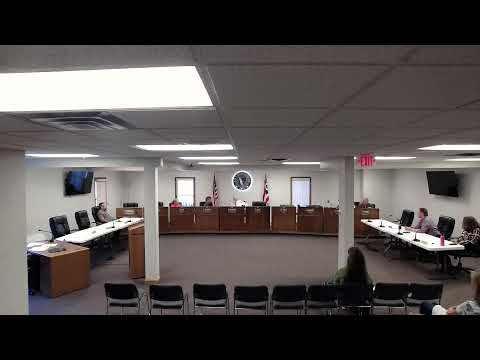
Members of the Pataskala City Development Committee discussed a developer proposal to change the terms of a memorandum of understanding (MOU) tied to the 310/Refugee Road property and indicated they would not waive the project’s traffic‑improvement obligations without a credible traffic study or an alternative funding mechanism.
Members of the Pataskala City Development Committee discussed a developer proposal to change the terms of a memorandum of understanding (MOU) tied to the 310/Refugee Road property and indicated they would not waive the project’s traffic‑improvement obligations without a credible traffic study or an alternative funding mechanism.
City staff told the committee that the current site plan and MOU — negotiated when the site was originally approved for a large retail node, senior living and related uses — require the property owner to fund intersection and Refugee Road improvements when the development reaches certain thresholds. Staff said the current owner is marketing the site to outside buyers, including Addison Properties (represented in materials by E. Hunt and a partner identified as Mike), and that the prospective buyers have suggested building mostly townhomes and limiting retail, which would change the anticipated traffic pattern.
A councilmember told the prospective purchaser’s representatives, if they seek to avoid the road improvements, it is “a nonstarter.” The councilmember said, “If you're not planning on doing traffic improvements, it's a nonstarter. It just isn't gonna work. Unless you can show me a traffic study that says you don't need to, which would be, like, 1 unit per 5 acres. Don't don't bother. It's just not gonna happen.” The same speaker added bluntly, “Somebody's gonna get killed. We're not going to be responsible for putting something on that corner that is gonna to blow that intersection up.”
Staff and committee members described two paths the developers could pursue: pay applicable impact fees (which would contribute to mitigation) or fund a traffic study that could justify different mitigation requirements. The committee also noted that the site’s prior PUD and grandfathering history meant impact fees were not enforced at an earlier stage; changing the MOU or reworking approvals would be required for any new arrangement. One member observed that impact fees alone would not produce enough revenue to build the full improvements but could reduce the developer’s direct obligation.
The committee agreed to let prospective buyers present concept plans to the Development Committee and to the Planning & Zoning Commission, but cautioned staff and council would be unlikely to accept a proposal that entirely eliminates the MOU’s road‑improvement requirements. Staff was asked to prepare a short bullet list summarizing the MOU obligations and the original development plan so committee members have a concise reference before developer presentations. The Planning & Zoning Commission will hear related materials in June; the committee discussed scheduling a Development Committee meeting on June 16 or July 7 for concept presentations.
No formal amendment of the MOU occurred at the meeting; committee members encouraged the developers to follow the public application process if they wish to change the approved plan and any MOU terms.