Get Full Government Meeting Transcripts, Videos, & Alerts Forever!
Get email alerts on the Behavioral Health topic
No spam. Unsubscribe anytime.
Kent County commissioners approve FY26 agreement with Midshore Behavioral Health after annual update
Summary
The Kent County Board of County Commissioners voted to accept and sign a FY2026 letter of agreement with Midshore (Mitchell) Behavioral Health following an annual presentation on regional programs, homelessness initiatives, crisis beds and state-supported discharges from psychiatric hospitals.
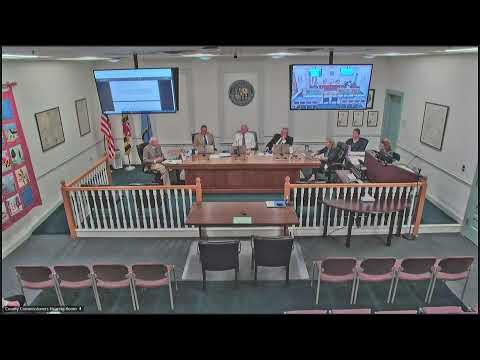
Mitchell Behavioral Health gave the Kent County Board of County Commissioners an annual update Tuesday and the board approved and signed a fiscal year 2026 letter of agreement to continue Midshore’s role as the county’s core service agency and local behavioral health authority.
Katie Dilley, chief executive officer of Mitchell Behavioral Health, told commissioners the agency serves as the county’s local behavioral health authority "in partnership with the Kent County Health Department." She summarized regional planning work, homelessness coordination and the agency’s trauma-informed care initiative.
The presentation highlighted several programs and figures specific to Kent County and the Midshore region. Lisa Short, adult population supervisor and SOAR lead, said Midshore funds 12 crisis beds at the A.F. Whitsett Center and supports an adolescent clubhouse and school-based coordinated supports. Dilley said the agency has placed 36 people out of state hospitals into assisted-living settings funded entirely by state grants and that about 50% of Midshore’s programming funding is federal.
Dilley described a summer "Defeat the Heat" initiative to provide hydration stations and cooling centers across the five-county region and listed partnerships including the Eastern Shore Behavioral Health Coalition and a regional peer support recruitment effort in partnership with the Kent County Health Department.
On local data, Short said Kent County’s public behavioral health system served 1,140 people for mental health services in fiscal 2024 (about 6% of the county population) and 544 people for substance-use services (about 3%). Short also summarized service-area utilization: outpatient services represented the largest share of mental-health service use, and laboratory and outpatient services were highest on the substance-use side.
After questions from commissioners about homelessness counts and school‑aged children who are unhoused, Dilley said Midshore conducts the federally required point‑in‑time count and offered to supply county‑level data in a follow-up. Commissioners then voted to accept and sign the FY26 letter of agreement with Midshore Behavioral Health.
The board’s action was procedural: the motion to accept and sign the FY26 letter of agreement passed by voice vote. Commissioners did not change the agreement during the meeting and asked for follow-up data on homelessness metrics and school‑based numbers.