Lifetime Citizen Portal Access — AI Briefings, Alerts & Unlimited Follows
Education Department opens negotiated rulemaking on Title IV, seeks wide public input on PSLF, IDR and regulatory reforms
Loading...
Summary
The U.S. Department of Education opened negotiated rulemaking on Title IV, asking for public comment on proposed changes to Public Service Loan Forgiveness, income-driven repayment, gainful-employment and related regulations.
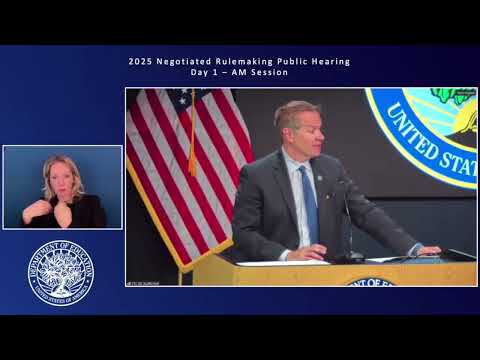
Washington — The U.S. Department of Education on Friday opened a public hearing to begin negotiated rulemaking over Title IV regulations governing federal student aid, soliciting feedback from borrowers, college leaders, accreditors and other stakeholders on proposals the department says could reduce compliance burdens and lower college costs.
“On behalf of the United States Department of Education, we welcome you and look forward to hearing your comments and your feedback,” said Tammy Abernathy of the department's Office of Postsecondary Education, who introduced James Bergeron, the department’s deputy undersecretary and acting undersecretary. Bergeron told attendees the session is the first of two public hearings and that the department seeks input on a range of topics tied to Title IV of the Higher Education Act of 1965.
The department said it is soliciting comments on streamlining federal financial-aid regulations while “maintain[ing] or improv[ing] program integrity and institutional quality,” and on regulatory changes affecting Public Service Loan Forgiveness (PSLF) and income-driven repayment (IDR) plans. Bergeron said written comments were being accepted through May 8 and that a second hearing would be held virtually on Thursday, May 1; the department also said it will publish a Federal Register notice to convene negotiated rulemaking committees and seek nominations for those committees.
Why it matters: The negotiated rulemaking process can lead to proposed regulatory language that becomes the basis for formal rules. Changes to Title IV rules affect eligibility and obligations for tens of millions of borrowers, the way colleges qualify for federal aid and how programs such as PSLF and IDR operate in practice.
Most of the hearing focused on stakeholders’ concerns about PSLF and IDR and on whether regulatory changes should preserve, narrow or expand current eligibility. Bergeron and other department staff said they are also seeking feedback on repayment-plan formulas after litigation that affected the administration’s prior SAVE plan, and on regulatory obstacles they say can hinder innovation and raise institutional costs. He said the department anticipates forming multiple negotiated rulemaking committees over the next year to cover distinct subjects and will provide issue papers and draft regulatory language during the in-person negotiations.
Department logistics and next steps: Tammy Abernathy described the public-comment procedures for the in-person hearing — three-minute speaking slots for registered commenters and a posted transcript and audio recording to follow — and the department confirmed the extended written-comment deadline of May 8. The department said it will use the public comments to identify topics for negotiated rulemaking committees and will invite nominees to serve on those committees.
Officials at the hearing emphasized that negotiated rulemaking is only one part of the rulemaking process: any draft regulatory language produced by a negotiated committee would still be subject to notice-and-comment procedures and applicable statutory limits. The department also flagged that some parts of the prior administration’s SAVE final rule have been enjoined by courts and said it seeks feedback on how to align repayment-plan rules with existing law and recent judicial decisions.
The hearing drew a mix of student borrowers, higher-education officials, accreditation representatives and nonprofit advocates who said they would submit written comments and consider serving on negotiating committees.